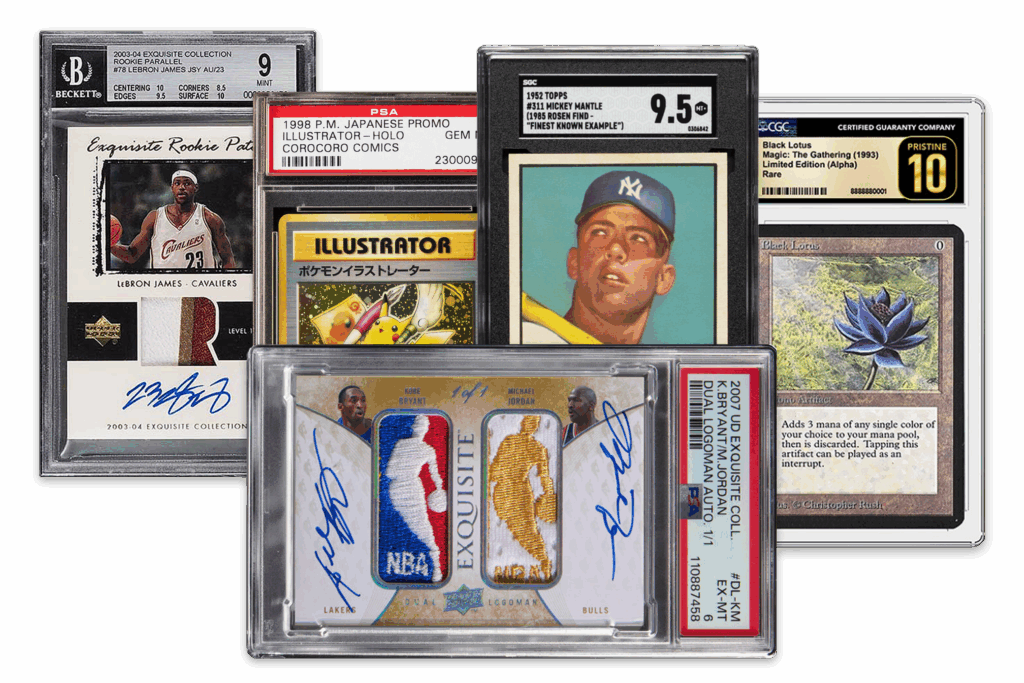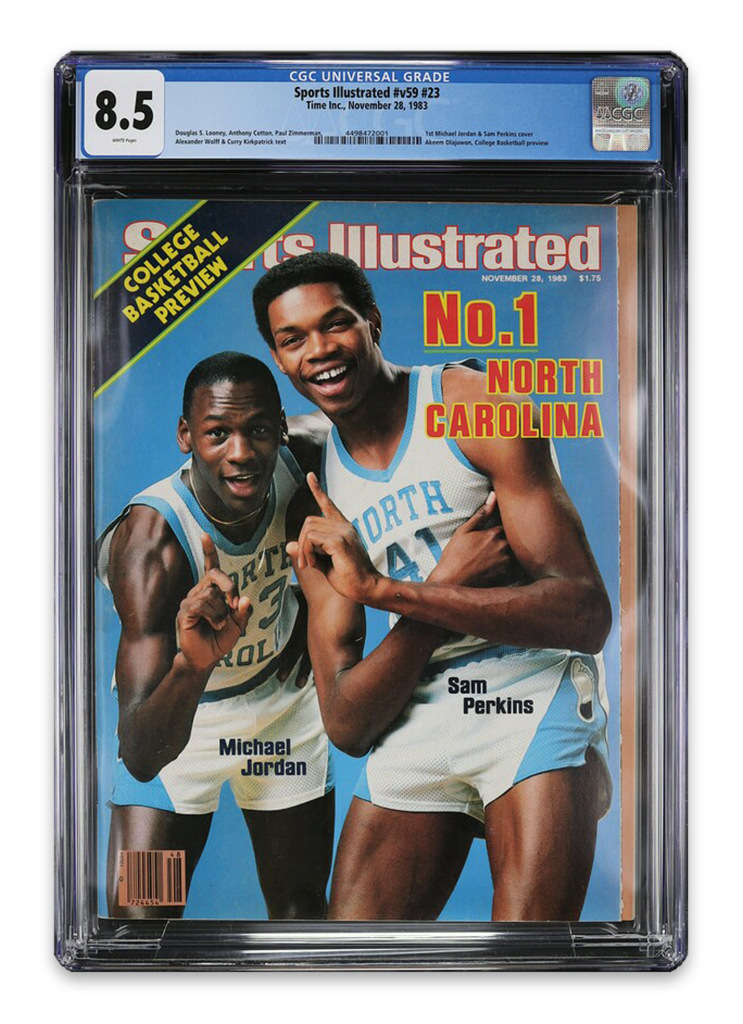
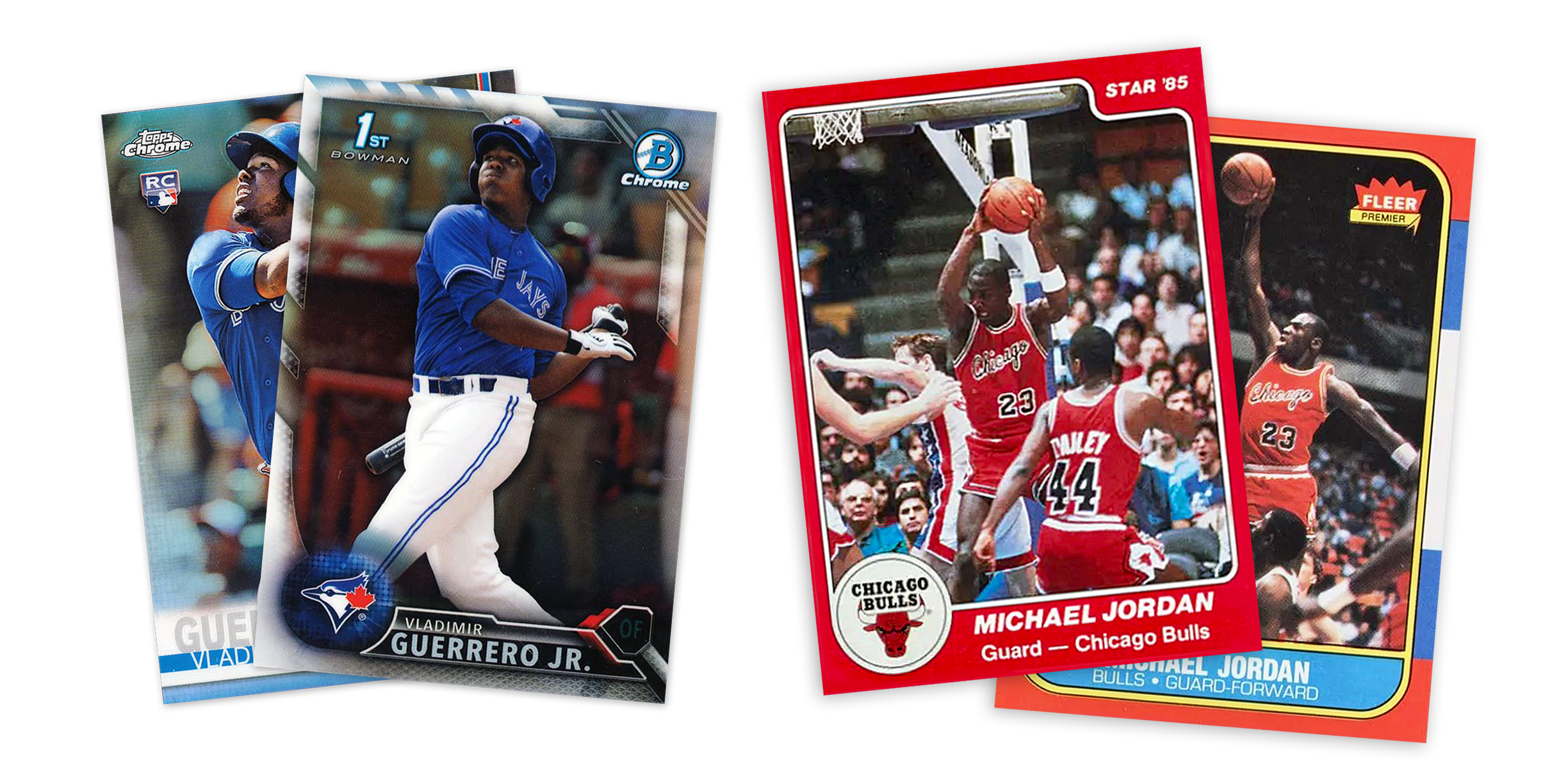
Rookie cards have shaped the sports card hobby like few other trends. These are often the most sought-after cards of any player and can become the center of a collection. Here’s what makes rookie cards unique, why collectors care, and how the rules have evolved across sports and in non-sport cards.
What is a Rookie Card?
Right off the top, let’s be clear: rookie cards don’t have one simple, universally agreed-upon definition.
Generally speaking, a rookie card is the first card of a player issued after they reach the top level of their sport. That means the MLB, NBA, NFL, or NHL for the four major North American leagues. The hobby broadly recognizes three criteria a card must meet to qualify. It must come from a fully licensed set. It must be part of the base set, not an insert, short-print, or special edition. And it must originate from a nationally distributed packed product. What gives these cards their value is simple: they mark the beginning of a career that could one day become something special.
Collectors began identifying and valuing rookie cards in the late 1970s. The 1952 Topps Mickey Mantle card, number 311 in the set, sparked both the boom and the ongoing debate about what actually makes a rookie card. Baseball collectors established the importance of rookie cards first, and the other major sports followed from there.
Classic Definition of the Rookie Card (RC)
In the 1970s, 1980s, and early 1990s, as card collecting became more organized and sets remained relatively straightforward, the definition of a rookie card followed a clear set of criteria.
To qualify, a rookie card had to be a player’s first base card in a regular, nationally distributed set, issued in packs, and fully licensed by both the league and the players’ association. It had to be part of the base set, meaning inserts, parallels, redemptions, food issues, regional issues, and special subsets were all excluded. If a player appeared on multiple base cards within the same set, only the standard, lowest-numbered, widely distributed version earned the rookie card designation.
This framework became known as the Beckett RC Definition, named after Dr. James Beckett and Beckett Media, one of the hobby’s longest-standing authorities. Under the Beckett rules, cards serial-numbered to fewer than 99 copies also do not qualify as an official rookie card. Beckett’s reasoning was that any card with such a limited print run is too scarce to be considered a true base card.
In the hobby, two long-standing debates center on what qualifies as the “true” rookie card of Yankees legend Mickey Mantle and Bulls icon Michael Jordan. Mantle’s 1951 Bowman #253 is generally recognized as his true rookie, as it was released during his debut season and follows traditional base-set rookie guidelines. His 1952 Topps #311, while far more famous and valuable, is considered his first Topps card and a cornerstone of the Topps flagship era rather than a technical true rookie.
Jordan’s case follows a similar pattern with some differences. His 1984-85 Star #101 XRC (more on XRCs below), distributed regionally in bagged team sets (not in packs) in limited quantities, was his first fully-licensed NBA card and is considered his “first” rookie by many hobbyists and veteran collectors. However, the 1986-87 Fleer #57 has long been viewed as his “true” rookie because it was widely distributed in packs and became the mainstream standard in the hobby market.
The key distinction in the Mantle and Jordan examples comes down to distribution. The 1984-85 Star Jordan was not sold in traditional packs, which is why it earned the XRC designation rather than a full RC designation.
The XRC
An XRC, or Extended Rookie Card, is a player’s first card from a manufacturer that appears in a supplemental set rather than the main flagship series issued in packs. Supplemental sets include traded sets, update sets, team sets, and special rookie boxed sets. XRCs were common in the 1980s, particularly for players who debuted mid-season in MLB, and were typically released later in the year through limited channels. Regional or special retail boxed sets, such as the Toys R Us Rookies sets, do not qualify as XRCs because they were sold exclusively through specific retailers or regions and are not considered mainstream releases.
Beckett distinguishes XRCs from official Rookie Cards, which must come from widely distributed packed base sets available through standard retail or hobby channels.
The XRC designation ended after 1993 when manufacturers began incorporating traded and update content directly into their main sets, making them more widely available. Collectors value XRCs for their relative scarcity and historical significance, though debate continues over whether they qualify as true rookies compared to base set cards. Notable examples include Barry Bonds’ 1986 Topps Traded, Roger Clemens’ 1984 Fleer Update, and Michael Jordan’s 1984-85 Star #101.
The Jordan card illustrates this debate well. Released in team sets with a limited production run of roughly 3,000 to 5,000 copies and not distributed through traditional packs, some collectors consider it his true rookie card based on its 1984-85 release date. Others favor his 1986-87 Fleer as the official rookie, citing its wider accessibility and traditional pack distribution. Authenticity concerns and rumors of a second print run have also followed the 1984-85 Star Jordan, further preventing it from being regarded as the definitive early Jordan card.
In more modern releases, such as Panini Select football and basketball, the XRC designation has also been applied to draft redemptions. A draft redemption is a card issued before a draft that represents a specific draft position, such as the first overall pick in the NFL Draft, or a particular team’s selection. Once the draft takes place and the player is identified, the card is produced and distributed in exchange for the original redemption card.
Today’s Rookie Card “Rules” in Basketball, Football, Hockey and Soccer
Card companies and collectors of basketball, football, hockey, and soccer use similar ideas but have their own unique symbols and rules when it comes to rookie cards.
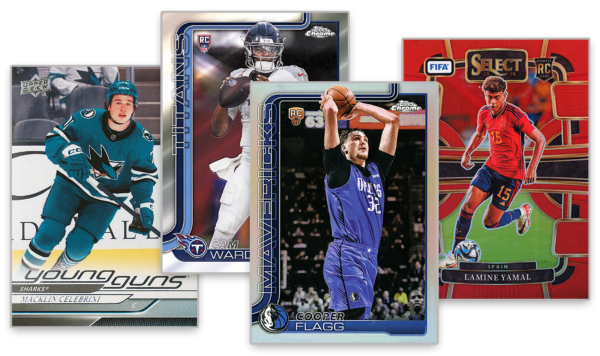
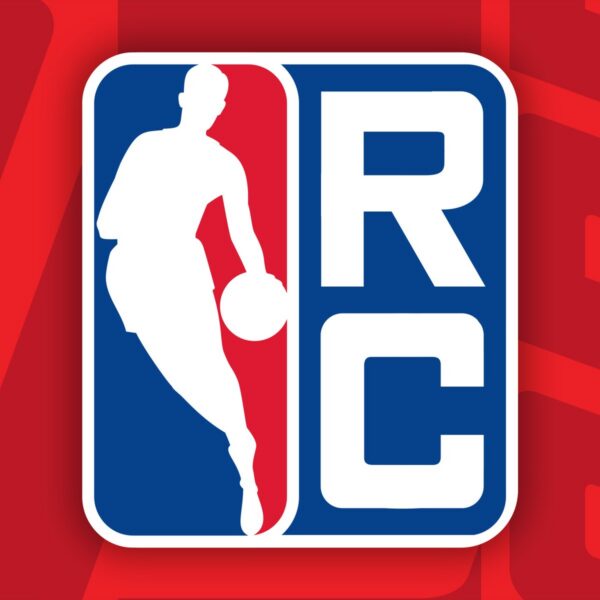
NBA Basketball: NBA players become eligible for their rookie cards once they are on an official NBA roster and covered by the NBPA’s group licensing program, meaning their first “RC” cards should appear in products released after they have reached the NBA level, not at the pre-draft or prospect stage. Current NBA licensee Topps has recently created a rookie card RC logo with the NBA logo, which will first be in use starting with the 2026 NBA Draft Topps Now program.
NFL Football: NFL players are eligible to have their rookie cards made only after they have made a professional NFL roster for the first time. According to licensing practices aligned with the NFL Players Association (through NFL Players Inc.), a player’s rookie card is produced in the season they reach the NFL roster, not simply as a prospect or draft pick. Current NFL licensee Topps has created a rookie card RC logo with the NFL logo.
NHL Hockey: NHL players become eligible for an official rookie card once they have appeared in an NHL regular-season or playoff game. Goaltenders are eligible as soon as they dress as a backup, even without taking the ice, as that appearance triggers entry into the NHLPA’s group licensing program and allows them to be featured on licensed cards. Emergency backup goalies who sign an amateur tryout agreement are not automatically eligible for a rookie card, even if they see game action. A rookie card can still be produced, however, if they sign a separate agreement with the card manufacturer. Current NHL licensee Upper Deck has not created a specific rookie card logo.
Soccer: Soccer players become eligible for rookie cards when major card companies produce their first licensed cards, typically after making their professional debut in a major league (like Premier League, Serie A or MLS) or entering significant international competition for their national team. Unlike other sports, major entities like FIFA or UEFA do not define rookie card eligibility criteria. Soccer players are represented globally by FIFPRO, a worldwide players’ union that advocates for their collective interests, similar to the unions that represent NBA, NFL, NHL and MLB players. Current FIFA, UEFA, MLS and club licensees Topps and Panini have created rookie card RC logos.
What About Baseball?
Baseball rookie card designation follows less straightforward rules than other major sports due to several unique factors.
Most baseball players spend several years developing in the minor leagues before reaching the majors. The MLB Draft includes 20 rounds, significantly more than the NBA (2 rounds), NFL (7 rounds), and NHL (7 rounds). MLB’s international free-agent system also allows teams to sign players as young as 16. Combined, these factors result in far more new players entering MLB-affiliated baseball each year than in other major sports.
The minor league system adds further complexity with its four developmental levels: Single-A, High-A, Double-A, and Triple-A. With so many players in the MLB ecosystem, predicting future Big Leaguers is particularly challenging.
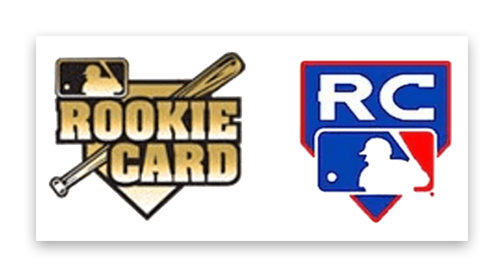
Topps holds a longstanding licensing advantage that many collectors refer to as the Topps grandfather clause. It allows Topps to feature players on MLB-branded cards as soon as they sign a professional contract with a club, potentially years before their major league debut. These early cards typically appear in Bowman products and carry a 1st Bowman logo, marking the player’s first official MLB-licensed card. This sets them apart from later flagship Topps issues, which carry the formal MLB rookie card logo, known as the RC designation. It is worth noting that not all cards bearing the RC logo are necessarily considered rookie cards by the hobby. More on that below.
What is a “1st Bowman” Card?
The “1st Bowman” card is a player’s first official MLB Bowman baseball card, often issued while a player is still a prospect in the minors but not always. The first usage of “1st Bowman” label appeared in 1996, and the mark has been used in every Bowman baseball set since 2003. These cards are clearly marked, usually with “1st” or “1st Bowman” on the front. Many collectors see these as the first fully-licensed pro baseball cards for a player, often valuing them as much — or more — than “official” MLB rookie cards, especially when the player is highly hyped. Overall, collectors designate 1st Bowman cards as “pre-rookie” or “prospect” cards.
What is the MLB Rookie Card Logo?
The MLB rookie card (RC) logo was introduced in 2006. Before then, collectors and card companies often disagreed about what qualified as a rookie card. To address this, MLB and the Players Association established a clear standard: only players on the 25-man roster — meaning they had appeared in the major leagues — could receive cards with the MLB RC logo. This change eliminated confusion and gave collectors a definitive way to identify official rookie cards. The MLB RC logo also boosted card sales by allowing collectors to find current rookies in new products, rather than searching through sets from two or three years earlier to get players’ first MLB cards.
The MLB RC logo also appears on parallel versions of rookie cards, online exclusives and inserts, illustrating how the modern definition of a rookie card continues to evolve, but technically, these are not true rookie cards.
MLB RC vs. 1st Bowman Card
Despite their differences, both card types hold real importance and value for collectors. Many collectors pursue both, but prospectors are particularly drawn to 1st Bowman cards for the appeal of owning a player’s earliest licensed card before they reach the majors. Opinion in the hobby is divided on which card matters more. Some collectors view the 1st Bowman as the key early card because it is the first fully licensed issue, while others consider the MLB RC to be the definitive card to own.
The Ohtani Rule
Under modern rookie card rules, all of Shohei Ohtani’s 2018 MLB-licensed base cards bearing the RC logo qualify as rookie cards — whether he’s shown pitching or hitting. Collector preference for one image over another is a market and aesthetic consideration. Both depictions are equally valid RCs from his MLB-debut year. Much like in Fantasy Baseball, where Ohtani is often treated as two separate players, the hobby tends to view him the same way: Ohtani the Hitter and Ohtani the Pitcher.
Looking Back
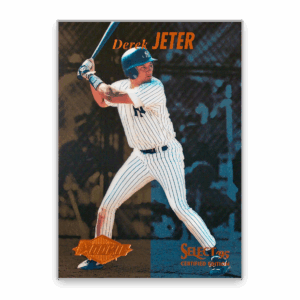
A new development in the rookie card debate involves applying current MLB RC rules to pre-2006 sets. For example, Derek Jeter’s first MLB cards appeared in 1993, but he didn’t debut until May 29, 1995. Does this mean cards issued after his debut should be considered his official MLB rookie cards, while the 1993 cards should be reclassified as prospect cards?
Insert Cards and Parallels
Insert cards are generally not considered rookie cards — even if they feature a player during their rookie year or carry a rookie logo. This is worth noting because today’s manufacturers apply rookie card (or RC) logos more liberally than in the past. The reason inserts don’t qualify is straightforward: they belong to a separate subset rather than the main base set. Parallels are a different story. When a parallel is simply a rarer version of a player’s base rookie card, many collectors treat it as a rookie card — just in a more limited form. Not everyone agrees on this, but it’s becoming the prevailing view. The bottom line: base rookie cards and their parallels usually qualify as rookie cards, while insert versions are more accurately called “rookie inserts” or “rookie-year cards.”
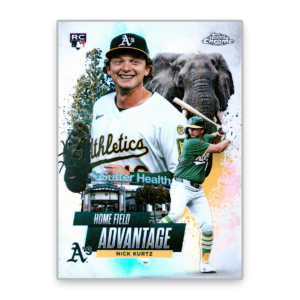
Minor League, International, College, Junior League Cards
Minor league, international, college, and junior league cards are generally classified as pre-rookie or prospect cards — not true rookie cards. That’s because they predate a player’s debut at the top professional level. These cards can still carry significant value and collector interest, but the hobby typically reserves the “rookie card” designation for a player’s first card issued after they debut in the major or top pro league.
Exceptions to the “Rules”
The 1996 SI for Kids Tiger Woods card is widely regarded as his true rookie card — though it arrived as a perforated magazine insert rather than a standard pack-issued card. The 2001 Upper Deck Tiger Woods card came later but was distributed through traditional packs, giving it a more conventional feel and a cleaner fit with true rookie card criteria.
For Lewis Hamilton, the 2006 Futera card is often cited as an early rookie candidate. The 2020 Topps Chrome Lewis Hamilton card, in general, carries more weight in the hobby, however — it comes from a major manufacturer and holds an official Formula 1 license, something the Futera issue lacked.
In both cases, the athlete’s earliest card tends to be the most sought after — driven more by scarcity than by whether it meets the strict definition of a true rookie card.
Pre-Rookie Cameos
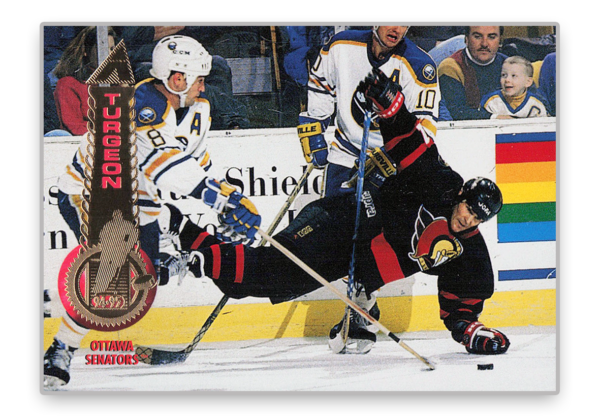
Sometimes a player or subject makes their first appearance on a card where they are not the main focus. One of the best‑known examples in hockey collecting features the 2007 first overall pick and perennial all‑star Patrick Kane, who appears on card #288 of Sylvain Turgeon in 1994‑95 Pinnacle as a young boy in the stands with his father.
Cameo cards also show up often in non‑sport and entertainment sets. One example is card #24 from the 1967 Marvel Philadelphia Stickers set, which shows Doctor Strange alongside Scarlet Witch. Scarlet Witch does not receive her own featured card until the 1978 Marvel Milton Bradley Card Game, where she appears on card #19.
These cards are not considered rookie cards, but collectors value them as meaningful early pieces in a character or player’s history. Here is a list of a few interesting pre‑rookie cameo sports cards you might not know about:
- 2017 Topps MLS Vancouver Whitecaps Team Card (with Alphonso Davies, one year before his rookie cards)
- 1994-95 Pinnacle Hockey #288 Sylvain Turgeon (with Patrick Kane in the stands, 13 years before his rookie cards)
- 1990-91 Hoops Basketball #205 Mark Jackson (with Lyle and Eric Menendez sitting in the front row)
- 1980 Topps Baseball #479 Montreal Expos Team Card (with Tim Raines in the photo, a year before his rookie cards)
- 1961-62 Topps Hockey #20 Boston Bruins Team Card (with Willie O’Ree in the photo, 36 years before his rookie card)
“True” rookie vs “Official” rookie
Let’s take a bold leap and try to define what makes a “true” rookie card as opposed to an “official” rookie card. Typically the term “true rookie” meant the most recognized and most popular rookie card.
True RC:
- Earliest professional card of a player
- Issued during the season of a player’s debut, or later
- Set is fully licensed by the league and players association
- Can be part of a regional set, food issue set, insert set or special edition
- Not part of a minor league, college or junior set
- One of the most collected and easily identified rookie cards of a player
- Must have a print run of 99 copies or more
Official RC:
- Issued during the season of a player’s debut, or later
- Set is fully licensed by the league and players association
- National distribution
- From a packed product, not from a boxed set or online exclusive set
- Part of a base set
- Not part of a minor league, college or junior set
- Not from a food issue or regional set
In many cases, especially in basketball, football and hockey, a true RC is also an official RC.
“First Appearances” in Non-Sport Cards
First appearance cards matter in non-sport collecting too, though the rules work a little differently than they do in sports cards.
Non-sport sets cover a wide range of subjects. Comics, movies, music, historical figures, and pop culture all fall under this category. In these sets, a “first appearance” refers to the earliest card featuring a particular subject, character, or actor. Licensed or not, that distinction matters to collectors, though licensing regulations vary by region.
A superhero’s first trading card or a pop star’s debut card can carry serious value. That’s true even when the card showed up in something as simple as a promotional giveaway.
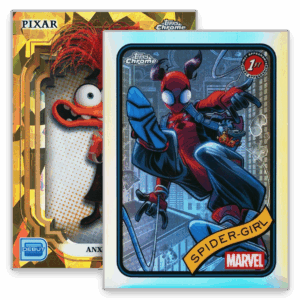
Unlike sports rookie cards, entertainment cards typically don’t feature official rookie markers or logos. Topps has recently started adding “Debut” or “1st Appearance” logos to some products, including Disney and Marvel Topps Chrome sets (see image above).
Collectors often research to identify the earliest known appearance of a celebrity or character, which might be a sticker, promotional insert, game piece or magazine pullout. However, being the first card issued doesn’t guarantee it will be the most valuable or sought-after. The value and demand for pop culture collectibles depend on several factors, including the card’s design and artwork, major TV or movie releases, hit albums, and the celebrity’s rising star power.
Identifying Key Cards in Non-Sport
Non-sport sets often include multiple cards per subject or character, so which one becomes the “key” card? Collectors generally follow these preferences:
- The lowest-numbered card featuring the character alone.
- Card #1 in a set (or the header card) often commands a premium for two reasons: it’s more prone to damage (especially in vintage sets), and it typically features the property’s main characters or logo.
- Visual appeal plays a bigger role than some collectors expect. Sometimes the most sought-after card in a set is simply the one with the best artwork, photography, or imagery, regardless of its numbering.
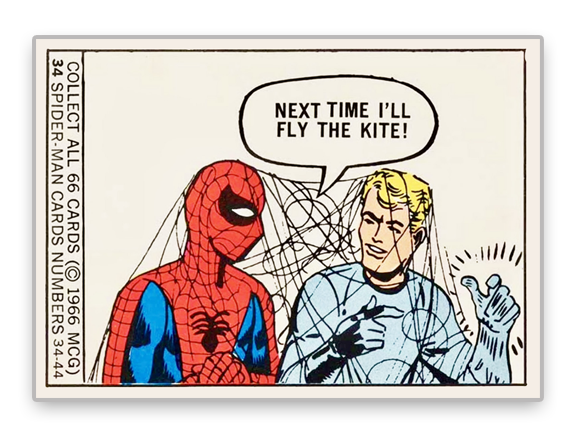
The market for first appearance non-sport cards continues to grow as collectors apply similar valuation principles used in sports card collecting.
Why Rookie and First Appearance Cards Matter
Rookie and first appearance cards have always played a unique role:
- They offer the first chance to own a piece of a player’s or character’s story.
- They create excitement among collectors and investors.
- The right rookie card can be a winning investment if the player or star goes on to greatness.
These cards can also create some confusion around what actually counts as a first appearance. The rules keep shifting, especially as new symbols and products enter the market. For many hobbyists, keeping up with those changes and knowing which card came first makes the hobby more rewarding.
Collectors Love Firsts
Collectors are naturally drawn to firsts. The first appearance of a character in a comic, the first edition of a famous book, the first card of a player. These items carry a sense of originality and importance that later versions rarely match. The appeal is not just about age. It is about capturing the moment something became real in the public eye, and that sense of historic significance makes those items feel more meaningful and more desirable. Rookie cards work the same way. Collectors want the earliest recognized version of a player’s card, especially when it comes from legitimate, widely accepted brands and sources. Quite often, the market ultimately decides which cards are the most sought after, regardless of any inconsistencies around official qualifications.
Conclusion
Rookie cards are more than just cards. They mark a beginning. The value they hold, both sentimental and financial, comes down to knowing the details: what year, which set, and why that particular card matters. Choose what feels right for your collection, and take the time to understand the rules and symbols that apply to your sport or fandom. That way, you can own a piece of history from the very start. As the hobby continues to grow and evolve, the rules and criteria around rookie cards will likely keep changing in the decades ahead.
Thank you to the following additional contributors: Dave Sliepka (formerly of Beckett Media), Jeff Morris (formerly of Pacific Trading Cards and Pinnacle Trading Cards), Russ Cohen of Sportsology.net.
Image sources: eBay, Fanatics Collect, Topps

GRADEx Staff
This story is a team effort. Our writers, editors, and hobby experts worked together, researching and reporting to bring you this piece.
Make us a Google preferred source