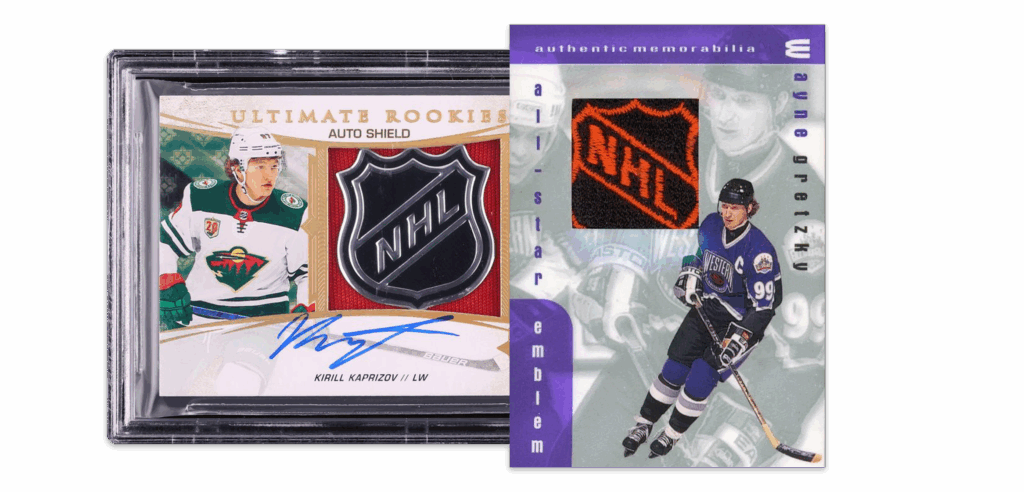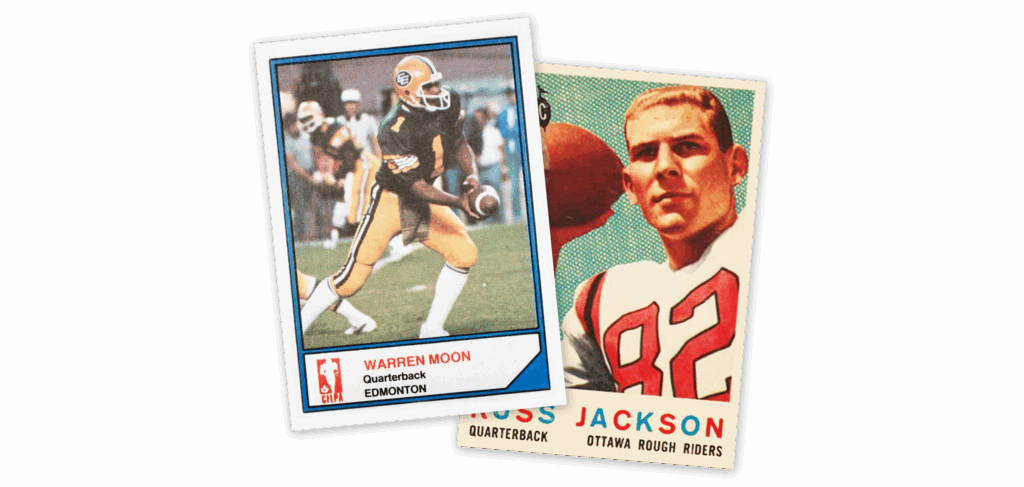

With today’s official release of the 2026 Upper Deck Tim Hortons Team Canada hockey card set, let’s review the history and impact of the Tim Hortons hockey card promotion. Before we do, it’s worth noting that this upcoming set is unique because it includes multiple layers of licensing with a true Olympic feel. This matters to collectors because it allows Upper Deck and Tim Hortons to use actual Olympic logos and photography, which is rare in trading cards.
Tim Hortons hockey cards represent a unique intersection of Canadian hockey culture, grassroots marketing, and collecting history. The program carries forward a tradition that began at another fast-food chain more than three decades ago. What started as a simple in-store premium has become one of the most visible and anticipated hockey card programs in North America.
From McDonald’s to Tim Hortons
The modern Tim Hortons promotion traces its roots to McDonald’s Canada. From 1991-92 through 2009-10, McDonald’s partnered with major card manufacturers (Upper Deck, Pinnacle and Pacific) to issue NHL-licensed hobby-style sets. For nearly twenty years, those sets were a seasonal ritual for young Canadian fans. They introduced kids to current NHL stars through the affordable pack-based promotions.

When the McDonald’s run ended after 2009-10, there was a noticeable gap in the Canadian food-issue landscape. For five years, no coast-to-coast, fast-food NHL card program existed. This was true even as interest in the hobby grew. This set the stage for Tim Hortons to step in with a concept that felt both familiar and fresh.
The Tim Hortons and Upper Deck Era
Tim Hortons and Upper Deck launched their first national NHL hockey card promotion in the 2015-16 season. They immediately positioned it as an annual event rather than a one-off. The core format has remained consistent: three cards per foil pack, sold exclusively in-store across Canada for a low price when bundled with a beverage.

The production scale quickly showed how central the program had become. For the 2021-22 Tim Hortons NHL set, promotion rules indicated at least 18.2 million packs were available. This was a staggering number for a food-issue release. It far exceeded early estimates that many collectors had repeated. Collectors described the 125-card base checklist that year as massive by food-issue standards. This reflected just how ambitious the program had grown.
Grassroots Marketing and Youth Focus
Tim Hortons has always framed itself as a community and grassroots brand. The card promotion fits perfectly into that identity. The company is deeply embedded in minor hockey through its Timbits Sports program. This program supports more than 100,000 children aged four to eight in house-league sports each year. In that context, handing a kid a low-cost pack of NHL cards with their hot chocolate becomes more than a sales tactic. It serves as an entry point into the hobby and NHL fandom.
“The Tim Hortons hockey card program has been a Canadian collecting staple since 2015,” says Barry Mah, Director of Canadian Operations at COMC. “It continues to be a great product with collectors in mind. It provides an opportunity to connect kids with parents through collecting. It’s been fun to see how the program has evolved over the years.”
Pricing is deliberately accessible. In recent years, packs have typically been offered at a discounted price (around one dollar) with the purchase of a qualifying beverage. Without a drink, they remain reasonably priced. For many families, that small add-on turns a routine coffee stop into a collecting experience. For a generation of kids, it represents their first exposure to card terminology, pack odds, and the thrill of a “hit.”
Set Design, Inserts, and Innovation
While the promotion is mass-market, Upper Deck has never treated it as a basic product. Since 2015-16, Tim Hortons sets have been printed on holographic foil stock. This gives even base cards a premium feel on par with some hobby releases. Each year brings a new mix of insert themes. Everything from clear acetate cards to lenticular technologies, plus ultra-rare autograph and memorabilia cards, and superstar-driven subsets are designed to keep adult collectors engaged alongside younger fans.
“When Tim Hortons releases a new product, the shop attracts serious master collectors who want to grab the harder-to-find inserts right away,” says Jeff Smith of Game Breakers Sports Cards & Collectibles in Ottawa, ON. “We do a lot of trading with the common inserts to get the rarer ones. We’re constantly buying and selling during the release month. As time goes on, it becomes harder to restock, especially the rare inserts.”
In the 2021-22 season, Tim Hortons released two hockey card sets instead of one. The first came out in October 2021 with NHL players, as usual. Then in January 2022, they released a second set featuring 100 cards of Canada’s men’s and women’s national team players. Tim Hortons made at least 5.8 million packs of the Hockey Canada set and sold a matching album to go with it. They also limited customers to buying ten packs per visit. These details show how big and carefully organized the promotion had grown.
“It’s likely the most collected hockey set every year,” continues Smith. “When there are two sets in a season, the first one is usually more popular. But this year could be different, especially if Canada wins the Gold Medal. It usually generates intense activity and enthusiasm for at least a month as collectors race to complete their sets.”
Expanding Themes: Legends, Duos, and 2026 Team Canada
As the promotion matured, Tim Hortons began experimenting with narrative-driven themes. These played on nostalgia and storytelling. As mentioned, in 2022, the company rolled out a collection centered on Canadian national-team players. A subsequent campaign highlighted legendary players. It blended all-time heroes with current stars to appeal across generations. While another campaign focused on rookie-year photography.
By 2024, the “Greatest Duos” theme emerged. It showcased notable pairs of active and retired NHL and PWHL players with strong on-ice or personal connections. These included teammates, rivals, siblings, or iconic tandems. The campaign was supported by TV spots (featuring the Tkachuk family), billboards, and digital media. It reinforced that the cards are more than static collectibles.
This leads us to the most recent release: the 2026 Team Canada edition. It’s licensed by the Canadian Olympic Committee, Hockey Canada, NHLPA, and NHL Alumni Association. No hockey release has ever had all of these entities on board. For the first time, collectors will be able to pull cards featuring actual Olympic photography. Past national team releases were only permitted to use imagery from other international tournaments, not the Olympics.
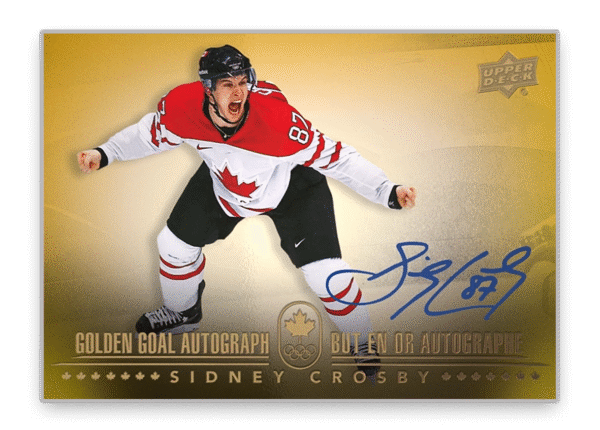
“This could be the best Tim Hortons release yet,” Mah says. “The ultimate chase card features what’s arguably the most iconic moment in Canadian hockey history — Sidney Crosby’s Golden Goal Autograph card. You can almost hear Crosby screaming through the card.”
There are 10 copies of the card, inserted at a staggering rate of one in 686,080 packs. This means over 6.86 million packs were produced. Review the full details of the set here.
Tim Horton: The Man Behind the Brand
The emotional weight of the promotion is amplified by the story of Tim Horton himself. Born January 12, 1930, in Cochrane, ON, Horton became one of the most respected defensemen of his era. He helped the Toronto Maple Leafs capture four Stanley Cups in the 1960s. Over a 24-year NHL career, he earned six All-Star selections. He finished with 115 goals and 403 assists before his posthumous induction into the Hockey Hall of Fame in 1977.
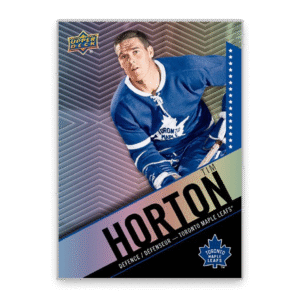
Off the ice, Horton opened his first coffee-and-doughnut shop in Hamilton, ON, in 1964. It was a modest storefront that quickly proved successful. By the time of his death in a car accident in St. Catharines, ON on February 21, 1974, the chain had grown to around 40 locations. His business partner Ron Joyce would eventually expand Tim Hortons into a multinational brand, still headquartered in Canada, with thousands of restaurants. Canadians take pride in the “Canadianess” of the chain, and the fact that today’s kids pull NHL cards at a coffee shop bearing the name of a Hall of Fame defenseman gives the promotion a uniquely Canadian sense of continuity.
Cultural Impact, Nostalgia and Conclusion
Tim Hortons hockey cards tap into a powerful cycle of nostalgia. Many adults who chase the latest Tim Hortons inserts grew up with McDonald’s sets in the 1990s. Now they experience the same thrill alongside their own children. Marketing insiders have noted that reviving and refreshing hockey trading cards has helped Tim Hortons stay among the most influential brands in Canada. The cards simultaneously “tug at the heartstrings” of older fans and appeal to younger collectors discovering the hobby.
The cards have also broadened the hobby’s reach. Because they are sold in a ubiquitous quick-service chain rather than a specialized hobby shop, they reach casual coffee drinkers, parents, and kids who might never seek out a card store. For the NHL and NHLPA, that presence in everyday life may be the most valuable part of the promotion. Millions of packs are distributed each fall. Each one is a pocket-sized piece of hockey’s past, present, and future sliding across a Tim Hortons counter.
Image sources: Tim Hortons, eBay

GRADEx Staff
This story is a team effort. Our writers, editors, and hobby experts worked together, researching and reporting to bring you this piece.
Make us a Google preferred source