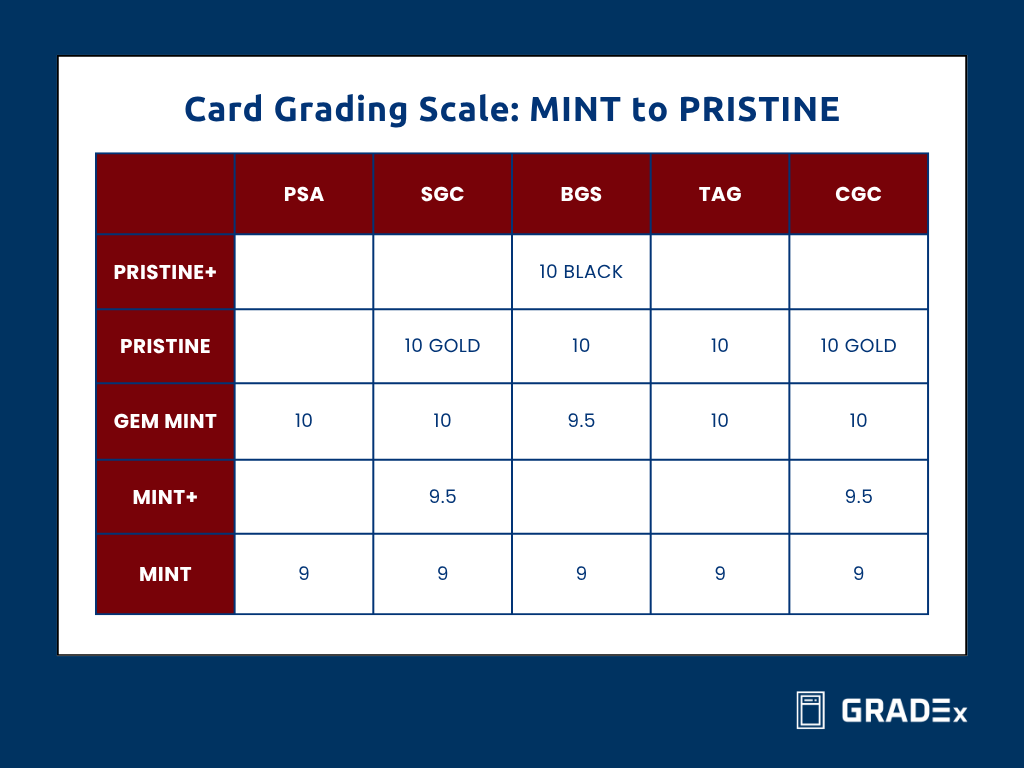
Scales of Grading
June 2 2026 by Whitespace

An informative and insightful source with a living Market Report for graded trading cards and collectibles
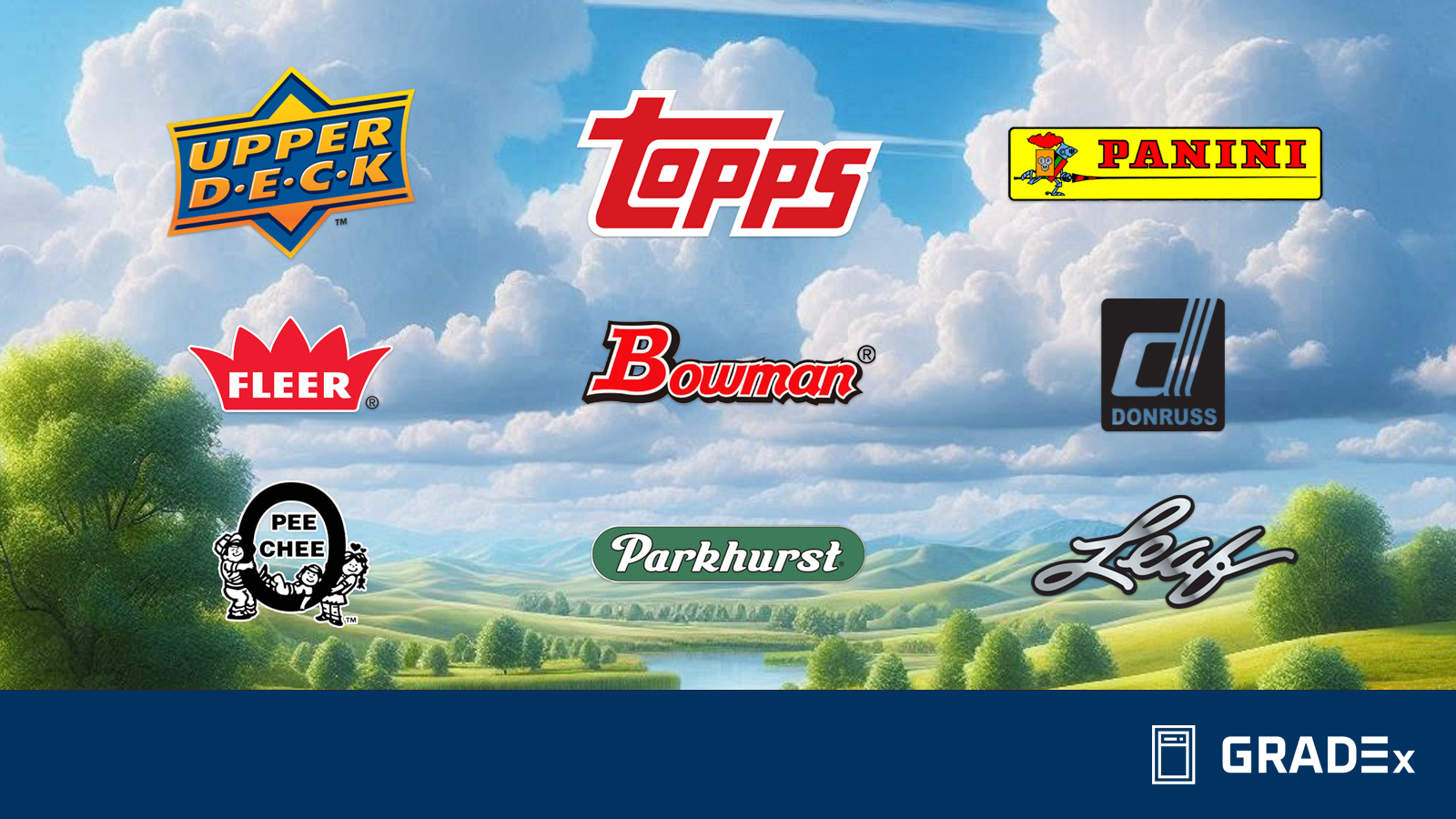
In the previous chapter, we explored the roles of licensors, such as leagues and players associations, and licensees, including card companies and manufacturers. In this chapter, we will delve into the brands and products developed by these manufacturers.
By the end of this chapter, you should be able to differentiate between a brand and a manufacturer, gaining a clear understanding of their distinct roles. You will also be able to list examples of brands associated with specific manufacturers and identify popular brands from the past. Additionally, you will develop an understanding of brand equity in grading and how it influences consumer perception. Lastly, you will be equipped to discuss the major channels through which brands are distributed, providing a comprehensive view of brand dynamics in the marketplace.
A manufacturer is a card company that holds the rights to design and produce trading cards. However, most manufacturers don’t handle the actual printing and packaging — they outsource this work to third-party providers.
The major sports trading card manufacturers currently hold these licenses:
Topps: MLB/MLBPA, NBA/NBPA, NFLPA (NFL in 2026), NHL/NHLPA (for stickers), UEFA, NCAA, College/NIL
Panini America: NFL/NFLPA (until 2026), MLBPA, FIFA, WNBA, College/NIL, NASCAR, LIV Golf
Upper Deck: NHL/NHLPA, CHL, Hockey Canada, College/NIL
A brand encompasses the trade name, design, and attributes of the products developed by a manufacturer. A manufacturer will often develop several different brands, each desired to appeal to a different collecting demographic. Most often, these brands are differentiated by product theme and price point.
In the sports trading card world, brands sometimes outlast manufacturers, and vice versa.
Example: Upper Deck is the manufacturer of many brands, including the following NHL hockey brands: Artifacts, Black Diamond, MVP, O-Pee-Chee, Overtime, Parkhurst, SP Authentic, SP Game Used, SPx, Synergy, Trilogy, The Cup, and Upper Deck (Series 1 & 2).
It is also important to note that often a manufacturer’s flagship brands have the same name as the manufacturer. Like Upper Deck Series 1 & 2.
Over the years, some of the industry’s most legendary brands have undergone numerous transformations, changing ownership and evolving along the way. Below are some of the most prominent examples:

Topps was founded in 1938 by the Shorin brothers in Brooklyn, New York. The company started out making chewing gum, but found a clever way to stand out from competitors in the early 1950s by tucking trading cards inside their gum packs.
That gamble paid off in a big way. The 1952 Topps baseball set, designed by Sy Berger, changed the hobby forever. It gave collectors a new standard for what a trading card could look like, and it produced one of the most iconic cards in history: the 1952 Mickey Mantle.
From there, Topps kept growing. The brand moved well beyond baseball, adding cards for football, basketball, and hockey, then branching into pop culture with sets tied to television, film, and global phenomena like Star Wars and Pokémon.
That kind of range helped Topps stay relevant across generations of collectors. In 2022, Fanatics acquired the company, bringing Topps into a new chapter while keeping its legacy intact.
Few brands in the hobby can claim the kind of staying power Topps has built over more than eight decades. It remains one of the most recognized names in the trading card world.
Panini was founded in 1961 by brothers Giuseppe and Benito Panini in Modena, Italy. The business started in newspaper distribution, but a chance discovery changed everything. The brothers came across a batch of unsold stickers and decided to package and sell them. The response was immediate.
That same year, Panini launched “Calciatori,” the first officially licensed soccer sticker collection complete with an album. It caught on quickly and spread across Europe, turning a small experiment into a thriving business.
The company kept building on that momentum. Panini expanded into major global events, producing sticker albums for the FIFA World Cup starting with the Mexico 1970 edition. Through the 1980s, the brand grew into a household name, with collectors across the world chasing stickers and filling albums.
The next big move came in 2009, when Panini entered the US market by acquiring the Donruss/Playoff Corporation. That acquisition gave the company a serious foothold in the North American sports trading card space.
Today, Panini produces stickers and cards across soccer, basketball, football, and other sports, along with entertainment properties. More than six decades after those first sticker packs, the brand remains one of the most recognized names in the hobby.

Upper Deck was founded in 1988 in Yorba Linda, California, with a clear goal: make trading cards that looked and felt better than anything else on the market.
The 1989 Upper Deck baseball set delivered on that promise. It introduced glossy finishes, sturdier cardboard, and counterfeit-proof holograms, raising the bar for the entire industry. Not long after, the company pushed things further by introducing randomly inserted autographed cards, a concept that reshaped what collectors expected from a pack.
Upper Deck expanded quickly from there. The brand moved into hockey, basketball, and football, then crossed into entertainment with sets tied to franchises like Looney Tunes, Marvel, DC Comics, Halo, and World of Warcraft.
Exclusive deals with some of the biggest names in sports also helped define the brand. Partnerships with Michael Jordan, Wayne Gretzky, and Tiger Woods gave Upper Deck a level of credibility that few competitors could match.
Today, Upper Deck remains one of the most respected names in the hobby. The company continues to produce high-quality cards across sports and entertainment, staying true to the standard it set more than three decades ago.

The Leaf brand traces its roots back to the Leaf Gum Company, founded in Chicago in the 1940s. The company made an early mark on the hobby with the 1948 Leaf Baseball set, one of the first full-color trading card series produced after World War II. That set is still well regarded today, in large part because it includes the first mainstream card of Jackie Robinson.
Leaf resurfaced in the 1980s as the Canadian counterpart to Donruss, producing bilingual baseball cards that carried the Leaf name prominently. Then in the early 1990s, the brand shifted toward the premium end of the market with a high-end baseball card set that reflected where the hobby was heading. Donruss acquired the brand in 1994, adding another chapter to its long history.
The story did not end there. In 2010, Leaf was reborn as a modern trading card company with a fresh start and a broader vision. Today, Leaf produces cards across a wide range of sports and non-sports categories.
Without licenses from the major sports leagues, Leaf has found its own lane. The brand has built a loyal following through creative designs and products that stand out on their own merits.

Rittenhouse Archives was founded by Steven M. Charendoff in January 1999. Based in Jenkintown, Pennsylvania, the company focuses on licensed non-sports trading cards built around science fiction, fantasy, and comic book properties.
The catalog includes some of the most recognized franchises in entertainment, among them Star Trek, James Bond, Marvel Comics, and Game of Thrones. Charendoff brought serious industry experience to the venture, having worked previously with Fleer/SkyBox and the National Hockey League.
Over the years, Rittenhouse Archives has established itself as one of the top names in non-sports cards. The company has earned a strong reputation for product quality and design, and continues to grow its lineup with releases that appeal to dedicated collectors in that space.

The Bowman brand traces back to the Bowman Gum Company, founded by Jacob Warren Bowman in Philadelphia in 1927. Like many gum companies of that era, Bowman found its way into trading cards, making a strong impression with the 1948 Bowman Baseball set.
Through the early 1950s, Bowman grew into a genuine rival to Topps. That competition came to an end in 1956 when Topps acquired the brand and shut down its independent operations.
Bowman sat dormant for decades before Topps brought it back in 1989. The revival stuck. Before long, Bowman carved out a clear identity in the hobby as the go-to brand for rookie and prospect cards, a reputation it continues to hold today.

Donruss was founded in 1954 by brothers Donald and Russell Wiener in Memphis, Tennessee. The company started in confectionery before shifting its focus to trading cards in the 1960s and 1970s, producing popular sets tied to Marvel Super Heroes and well-known television shows.
Donruss entered the sports card market in 1965 with a racing card series, then became a major baseball card producer in 1981, joining Fleer and Topps as one of the three dominant brands of that era. Through the 1980s and 1990s, the company expanded into football, basketball, and hockey.
Pinnacle Brands acquired Donruss in 1996, but Pinnacle’s bankruptcy in 1998 brought card production to a halt. The brand was revived in 2001 by Playoff Corporation and later picked up by Panini Group in 2009. Today, Donruss remains one of the cornerstone brands within Panini’s portfolio.

Fleer was founded by Frank H. Fleer in 1885, making its name first in the candy industry. The company is credited with inventing bubble gum, giving the world the iconic Dubble Bubble brand. Fleer made its first move into trading cards in 1923 with a baseball card series.
Over the following decades, the company broadened its lineup, adding football cards in 1960 and basketball cards in 1961. The biggest moment in Fleer’s card history came in 1981 when it re-entered the baseball card market, breaking Topps’ longstanding monopoly and becoming a dominant force for the next two decades.
Fleer merged with SkyBox International in 1995, strengthening its position across multiple card categories. Financial pressures eventually caught up with the company, and in 2005, Upper Deck acquired Fleer/SkyBox, ending its run as an independent operation. The Fleer name lived on, but its era as a standalone brand had come to a close.
O-Pee-Chee was founded in 1911 by brothers J.K. and D.H. McDermid in London, Ontario. The company started as a gum and candy maker before moving into trading cards in the 1930s, bundling hockey cards with gum as a way to drive sales during the Great Depression.
In 1958, O-Pee-Chee partnered with Topps to produce cards for baseball, hockey, and other sports. That relationship made O-Pee-Chee the go-to brand for Canadian collectors, with bilingual cards that reflected the country’s dual-language identity.
The company ceased operations in 1996, but the name did not disappear. Topps licensed the O-Pee-Chee brand to keep it going, and Upper Deck later took over that role, continuing to release hockey cards under the familiar label.
Today, O-Pee-Chee lives on as part of Upper Deck’s lineup. For Canadian collectors, the brand carries a sense of history and nostalgia that few others in the hobby can match.

Parkhurst Products was founded in Toronto, Ontario in 1948 by George Kennedy. The company quickly became a beloved name in the hobby, launching its legendary “Parkies” hockey card series in 1951.
Over its 16-year run, Parkhurst produced 41 card sets spanning hockey, baseball, football, wrestling, and other sports. Despite that output and a loyal following, growing competition from O-Pee-Chee and Topps proved too much, and the company closed its doors in 1964.
The brand did not stay gone for long. Parkhurst was revived in 1991 under Pro Set, then again in 1994 by Upper Deck, and once more in 2000 under In The Game, Inc. Upper Deck acquired the brand again in 2005 and continues to release Parkhurst hockey cards today.
For Canadian collectors especially, Parkhurst holds a special place in the history of the hobby.

Allen & Ginter was founded in the 1860s by John Allen and Lewis Ginter in Richmond, Virginia. The tobacco company earned its place in hobby history during the late 1880s by inserting chromolithographed cards into cigarette packs. Those cards covered a wide range of subjects, from baseball players to Native American chiefs to wildlife.
The 1887 set featuring early baseball stars stands out as the first nationally distributed baseball card series, making Allen & Ginter a true pioneer of the hobby.
The brand merged with the American Tobacco Company in 1890 and gradually faded from view. More than a century later, Topps brought it back. The 2006 revival introduced Allen & Ginter to a new generation of collectors, blending sports, history, and culture into a distinctive annual release complete with autographs and memorabilia cards.
Today, the set remains one of the most anticipated releases on the hobby calendar each year. Its mix of themes and its nod to the brand’s deep roots give it a character that few modern products can replicate.
Score was launched in 1988 by Pinnacle Brands, the trading card company formerly known as Optigraphics. Founded in 1986, Optigraphics first made its mark with Sportflics, a lenticular card line that used motion effects to stand out in the hobby.
Score took a more traditional approach, winning collectors over with colorful designs, full-color card backs, and detailed player biographies. The brand expanded into baseball, football, basketball, and hockey, becoming one of the more recognizable names of that era.
Pinnacle later developed premium products under its own name while keeping Score as the affordable, entry-level option in its lineup. The 1996 acquisition of Donruss briefly made Pinnacle one of the most powerful companies in the hobby. That momentum did not hold. Overproduction and market saturation caught up with the industry in the late 1990s, and Pinnacle did not survive.
Score did. The brand carried on under later ownership and continues today as part of the Panini portfolio.

The Playoff brand was introduced in the early 1990s by Playoff Corporation, based in Arlington, Texas. The company started with football cards and built a reputation for premium designs, foil stamping, and strong photography.
Playoff expanded into other sports over time and became especially known for its memorabilia cards, which featured game-used materials like jerseys and footballs. That focus on premium content helped the brand carve out a distinct identity in a crowded market.
In 1999, Playoff acquired the rights to both Donruss and Score, bringing two iconic brands under its roof. A decade later, Panini Group acquired Playoff in 2009, folding it into one of the largest trading card portfolios in the industry.

The Philadelphia Chewing Gum Corporation was founded in 1947 by Edward P. Fenimore in Havertown, Pennsylvania. The company built its early reputation on bubble gum and novelty items before expanding into trading cards and stickers.
Philadelphia Gum made its biggest mark in the card hobby between 1964 and 1967 with NFL-licensed football cards, going head to head with Topps during a period when the two leagues were competing for fans. The company also produced sets tied to Marvel superheroes, World War II, and Robert F. Kennedy, showing a willingness to explore beyond sports.
After decades as a family-run business, Philadelphia Gum was acquired by Concord Confections in 2003 and eventually became part of Tootsie Roll Industries. The Philadelphia brand also saw a brief revival through Pacific Trading Cards in the mid-to-late 1990s, giving it one more chapter before fading from the hobby.

Pacific Trading Cards was founded in 1980 by Mike Cramer in Edmonds, Washington. The company built a reputation for pushing creative boundaries in card design, standing out with vibrant colors, holographic elements, and die-cut formats that few competitors were matching at the time.
Pacific expanded its lineup to include sets for Major League Baseball, the NFL, and the NHL, growing into a legitimate presence across the major sports card categories.
The early 2000s brought serious challenges. Losing key licenses weakened Pacific’s ability to compete in an increasingly crowded market. By 2004, Donruss had acquired the company, ending its run as an independent operation.
Pacific left behind a legacy built on design creativity and a willingness to try things differently, qualities that set it apart during its years in the hobby.

In The Game was founded in 1998 in Toronto, Ontario by Dr. Brian H. Price. The company quickly made a name for itself in the hockey card market, earning particular recognition for its “Be A Player” series, which guaranteed one certified autograph per pack.
ITG built out a strong lineup from there, adding sets like Between the Pipes, Ultimate Memorabilia, Heroes and Prospects, and a revival of the Parkhurst brand. Each product found a dedicated audience among hockey collectors.
The company lost its NHLPA license in 2005 but kept producing cards by working within other licensing agreements, including the CHL, AHL, PHPA, and Hockey Canada. That allowed ITG to continue featuring retired players, prospects, and international teams.
Leaf Trading Cards acquired the brand in 2014 and continues to release hockey products under several of the In The Game labels today.

Impel Marketing was established in 1989 in Durham, North Carolina, with a focus on non-sports trading cards. The company made an immediate impact in 1990 with the release of Marvel Universe Series 1, a set that stood out for its detailed character profiles and vibrant custom artwork.
By 1992, Impel had rebranded as SkyBox International and broadened its scope to include sports cards and entertainment franchises. Three years later, Marvel Entertainment acquired SkyBox and merged it with Fleer, forming Fleer/SkyBox International.

SkyBox International began as Impel Marketing before rebranding in 1992. The company built a strong reputation for innovative designs and high-quality cards across both sports and entertainment, with notable products in the NBA and NFL categories.
After the rebrand, SkyBox expanded into non-sports properties as well, producing sets tied to Star Trek, Marvel Comics, and DC Comics. That range helped establish the company as one of the more versatile names in the hobby.
Marvel Entertainment acquired SkyBox in 1995 and merged it with Fleer to create Fleer/SkyBox International. While the combined brand eventually ceased independent operations, its creative legacy carried forward through Upper Deck, which later acquired the Fleer/SkyBox assets.

NBA Hoops debuted in 1989 as a brand developed by NBA Properties. The inaugural set made an immediate impression, driven largely by the inclusion of the David Robinson rookie card, which became one of the most sought-after cards of that era.
Hoops built a following through clean designs, detailed player statistics, and dynamic action photography. The brand appealed to serious collectors and casual fans alike, striking a balance that kept it relevant through changing trends in the hobby.
Now owned by Panini, Hoops remains a staple of the basketball card market, valued for both its affordability and the nostalgia it carries for collectors who grew up with the brand.

The Goudey Gum Company was founded in 1919 by Enos Gordon Goudey in Boston, Massachusetts. The company became a trailblazer in the hobby with its 1933 “Big League Chewing Gum” baseball card set, which paired cards with bubble gum and featured vibrant hand-drawn portraits of legends like Babe Ruth and Lou Gehrig.
That 1933 set remains one of the most celebrated collections in the history of the hobby. Goudey continued producing baseball cards through the 1930s and into the early 1940s before eventually ceasing operations in 1962.
Today, Goudey cards are highly prized for their artistic quality and historical significance. Since 2007, Upper Deck has carried the brand forward, keeping the Goudey legacy alive for a new generation of collectors.

Pro Set was founded in 1988 by Ludwell Denny in Dallas, Texas. The company made an immediate impact by securing the first official licensing agreement with the NFL, giving it access to the league’s photo archives and the right to call its product “The Official NFL Card.”
Pro Set expanded from there, adding trading cards for the NHL, NASCAR, and the PGA Tour, along with several entertainment properties. The brand grew quickly and built a solid following across multiple categories.
That growth came with risks. Overproduction and financial mismanagement caught up with the company, and Pro Set filed for bankruptcy in 1994.
The story did not end there. Leaf Trading Cards acquired the Pro Set trademark in 2021, bringing the brand back for a new generation of collectors.

Press Pass was founded in 1992 in Huntersville, North Carolina. The company earned its place in hobby history by becoming the first to incorporate game-used memorabilia into trading cards, including race-used tires in NASCAR sets and game-used jerseys in basketball products.
NASCAR was the core of the business, but Press Pass also became well known for featuring future pro draft picks in their college uniforms, giving collectors an early look at players before they turned professional. The company eventually branched into non-sports cards as well, producing sets for entertainers like Elvis Presley and Kiss.
Despite its contributions to the hobby, Press Pass ceased operations in 2015. Leaf Trading Cards revived the brand in 2024, bringing it back with a new chapter to write.

Comic Images was founded in 1984 in Montvale, New Jersey, building its reputation as a producer of non-sports trading cards and stickers. The company worked with some of the biggest franchises in entertainment, including Marvel Comics, Star Wars, and WWF.
Comic Images became known for strong artwork and creative designs, expanding its catalog to cover television shows, movies, and fantasy art properties. The brand also made a notable mark with autograph cards, including some of the first signed cards featuring The Rock.
While its prominence in the hobby has faded over the years, Comic Images remains a nostalgic favorite, particularly among collectors with a passion for non-sports cards.
It is important to note that we will dedicate a full chapter to professional grading. In simple terms, professional grading involves third-party certification, authentication, and evaluation of cards, similar to appraising jewellery. The roots of professional grading go back to coin and stamp collecting. Professional card grading became imperative once sports card values began to substantially increase.
As previously mentioned, the four major brands and grading companies in this space are PSA, SGC, BGS, and CGC.
PSA was founded in 1991. SGC followed in 1998, and BGS was established in 1999. CGC Cards, founded in 2020, has a long history as the premier comic-book grader since 2000.
In today’s secondary market, PSA grades the most sports cards (roughly a 9:1 ratio compared to its top competitor SGC, who they now own), holds the strongest brand equity and, consequently, the highest resale value for graded cards.
For the same card in the same condition grade, SGC typically generates roughly 75-90% of the value of a PSA-graded card in the secondary market, while BGS and CGC cards generally sell for 70-75% of the value.
PSA and SGC cards have much more equivalent value in the vintage card market (cards produced prior to 1990).
From the early 2000s to around 2016, BGS was the top brand among collectors and investors in modern card grading. Since 2018, SGC has gained significant market share due to their unique black (“tuxedo”) holder, excellent and responsive customer service and industry-leading turnaround times. The trends in the graded card market are ever-changing and evolving.
What are the major channels of distribution? In other words, where are the cards sold?
Retail distribution refers to card products sold in big-box stores like Walmart, Target, or Toys “R” Us (in Canada).
Hobby distribution refers to products sold to independent hobby stores, online stores, and independent dealers.
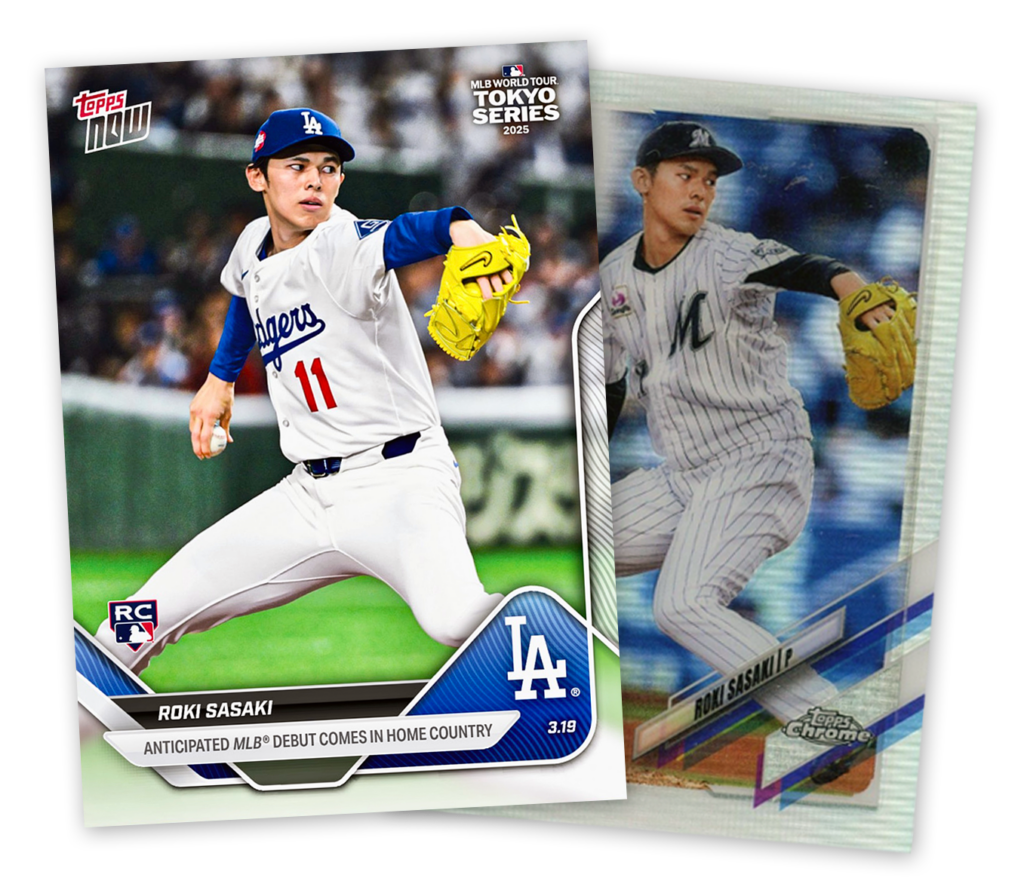
Direct distribution refers to products or individual cards sold directly to the end consumer. Examples Topps Now, Panini Instant and Upper Deck e-Pack.
Both “retail” and “hobby” versions of products typically offer insert cards, parallel card, and premiums that are unique to the respective channel. The base cards in the product are the same.
Manufacturers often create products specific to a distribution channel. Some examples include:
—
Next, Chapter 4: Types of Sports Collectors