Intro To Magazine Collecting and Grading
December 10 2025 by GRADEx

An informational and educational source with a living Market Report for graded trading cards and collectibles
This chapter provides a comprehensive overview of the digital landscape within the sports collectibles world. It explores the future of sports trading cards and collectibles while examining the impact of technology on the hobby. Additionally, it delves into several emerging markets that are reshaping the industry.
By the chapter’s end, you will be equipped to explain the foundational principles of digital collectibles and understand the core concepts of blockchain technology. You will gain a thorough understanding of Non-Fungible Tokens (NFTs) and recognize the major players in the digital collectibles market. Furthermore, you will be able to analyze the potential and implications of digital collectibles while exploring their growth trends and future outlook in this rapidly evolving space.
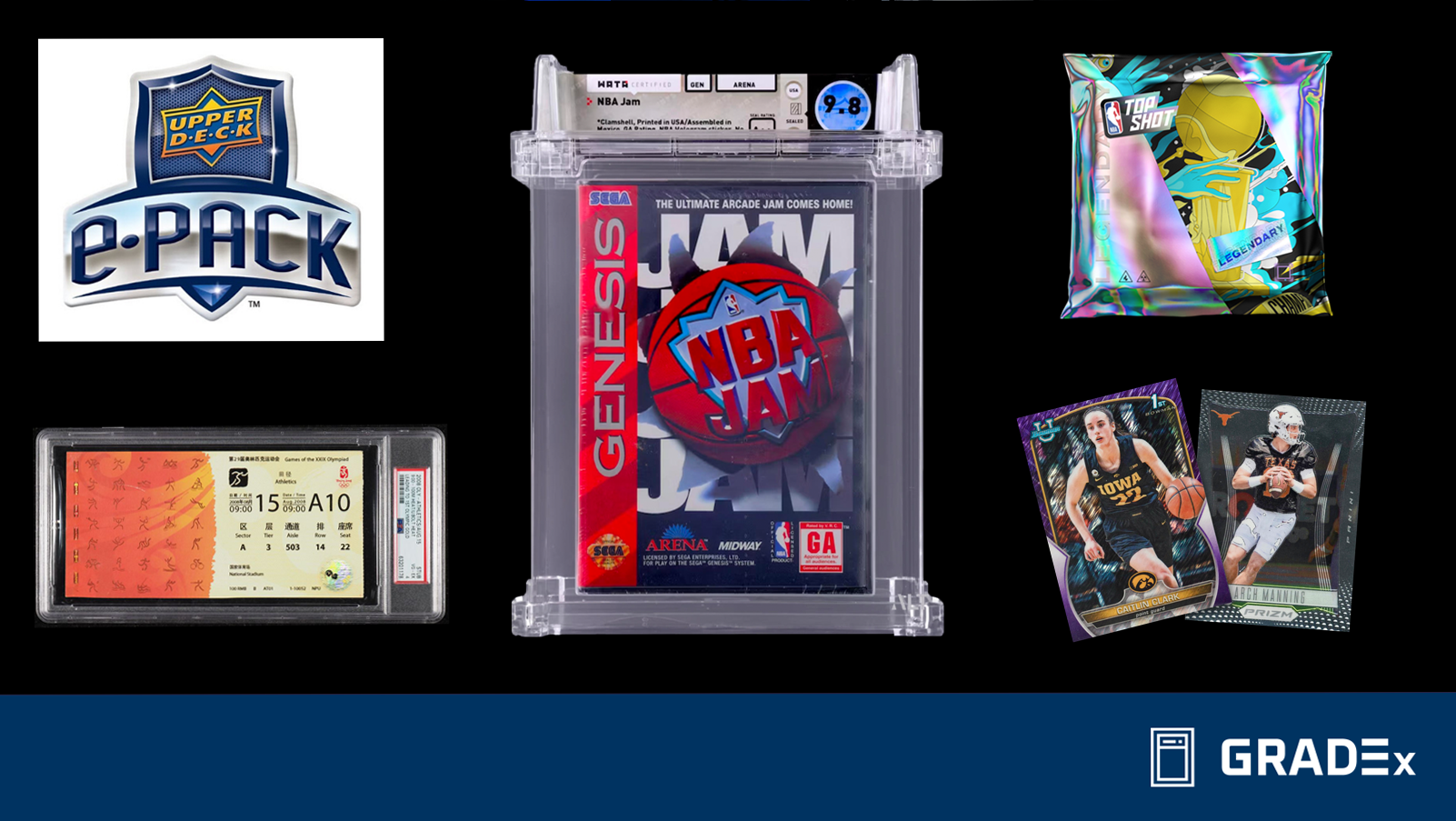
Virtual collecting has revolutionized the hobby by opening up endless possibilities for collectors worldwide. Online platforms like eBay have transformed the marketplace, allowing international buying and selling that connects enthusiasts across continents. Digital collecting platforms such as Upper Deck e-Pack and Topps Collect offer new ways to open packs and build collections virtually, while marketplaces like COMC provide sophisticated tools for cataloging and trading without shipping hassles.
Modern collecting embraces secure storage through vaulting services like Fanatics Collect vault and PSA Vault, where collectors store valuable items in climate-controlled facilities while viewing and trading them digitally. Professional grading services have become seamlessly integrated, with remote submission and digital vault storage of results.
The emergence of NFT platforms like SoRare for soccer and NBA Top Shot for basketball has created entirely new categories of digital-native collectibles, where purely digital ownership maintains all the excitement and value appreciation of traditional collecting.
Launched in 2016, Upper Deck’s e-Pack program is described as a “digital to physical platform.” Collectors can purchase packs from the e-Pack website or app, open them online, and choose to either have the cards shipped or stored. Here is a tutorial on Upper Deck’s e-Pack program for NHL hockey cards. COMC (Check Out My Cards) manages the storage and shipping of physical cards for e-Pack.
First off, let’s review exactly, what is an NFT? This video gives a compact overview: “NFTs Explained in 4 minutes.” Next, let’s look at a few examples of sports-licensed NFTs and digital collectibles:
NBA Top Shot
To date, NBA Top Shot from Dapper Labs stands as one of the most successful NFT sports products and marketplaces. Top Shot enables collectors to purchase NBA digital video highlights, known as “Moments.” Watch this video for more information.
NFL All Day
NFL All Day is an NFT digital collectibles platform developed through a partnership between the NFL, NFLPA, and Dapper Labs. It enables football fans to collect “Moments,” which are NFTs that capture highlights of significant plays, such as spectacular passes and touchdowns. These Moments are securely stored on a blockchain and can be bought, sold, or traded on a peer-to-peer marketplace. The platform celebrates the game’s epic highlights, offering fans a unique and interactive way to engage with their favorite sport. Watch this promotional video for NFL All Day.
NHL Breakaway
NHL Breakaway is an official NFT digital collectibles marketplace for the NHL, NHLPA, and NHLAA, powered by the Sweet platform. Similar to NBA Top Shot, Breakaway enables fans to buy, trade, and collect video highlights and memorabilia from both current and historical NHL moments. The platform also features interactive elements such as on-platform challenges, where collectors can earn real-life rewards and additional digital goods. Watch this video for more information.
SoRare
SoRare is a licensed soccer NFT product that combines elements of competition and fantasy sports. Below, you’ll hear from fantasy sports experts at RotoWire, who will provide an excellent breakdown of this rapidly growing platform. Many of these cards are fetching significant sums at auction. Watch this video for more information.
Panini and Topps NFT cards
Panini America launched its NFT trading card platform in January 2020, becoming the first company to introduce blockchain-based sports trading cards. Built on its own private blockchain, the platform allows collectors to buy, sell, auction, and trade digital cards. As of 2025, Panini offers NFT products for the NFL, NBA, NIL, college sports, FIFA World Cup, the Premier League, NASCAR, and more. Recent reports show strong trading activity, confirming that these digital sports card brands remain actively exchanged on the platform.
In 2021, Topps introduced its first NFT collection featuring the flagship 2021 MLB Topps cards, followed by several additional sets in 2021 and 2022. However, the company has since ended its NFT venture, announcing the shutdown of ToppsNFTs.com effective March 2025.
Topps Collect!
Topps Collect! transforms traditional trading cards into a dynamic digital experience, featuring beloved athletes, characters, and franchises including MLB, Marvel, Star Wars, and Disney. This innovative app enables collectors to build their digital card collections, engage in trades with fellow enthusiasts, and display their prized cards in personalized showcases. Beyond simple collecting, users can compete in real-time contests, advance through competitive leaderboards, and unlock exclusive rewards, creating an engaging, social platform where fandom comes alive through interactive gameplay and community connection.
Collectors are always on the lookout for the next big thing. Over the past six to eight years, the sports collectibles market has experienced tremendous growth in several new and exciting categories, attracting many new hobbyists.
At the end of the chapter, you will be able to:
Video game grading is a process where experts assess the authenticity and condition of video games, especially sealed or complete-in-box (CIB) games, and assign them a grade based on their condition. This grading helps collectors and enthusiasts determine the value and authenticity of their games.
The most well-known companies in this field are Wata Games, CGC, and Video Game Authority (VGA). These companies have established strong reputations for their grading standards and practices.
In addition to the overall grade, the quality of the game’s seal (if it is sealed) is also graded. This can range from A++ (nearly perfect) to C (significant defects). The grading process can include evaluating the game box, cartridge or disc, manuals, and any game-specific inserts. Each component is carefully assessed for its condition.
To illustrate the market’s potential, in August 2021, a high-grade, unopened, rare copy of the original Nintendo Mario Bros. game sold by Rally (the fractional company) for $2 million USD as a buyout. This exciting new collectible category is still in its infancy, particularly for sports video games.
Watch this video from the TV show ‘Pawn Stars’ featuring a high-grade copy of the Nintendo game “Mike Tyson’s Punch-Out!”
Discover the fundamentals of video game collecting with insights from Jon Waldman of WorthPoint. Jon has contributed to Beckett Media and numerous other collectibles publications. He is also the author of two books.
Similar to trading cards, professional grading of sports tickets involves authenticating, preserving, and certifying tickets from various events to assess their condition. PSA is the leading grader in this space. The ticket market has experienced significant growth over the past few years and appears to have a high ceiling.
Currently, compared to trading cards or other graded collectibles, the population reports for graded tickets are quite low, and very few copies are found in high grades. Special moments commonly captured on graded sports tickets include player debuts, record-breaking performances, championship games, historic matches, and farewell games.
Have a listen to this PSA podcast episode discussing grading sports tickets with Principal Ticket Authenticator Matt Fuller.
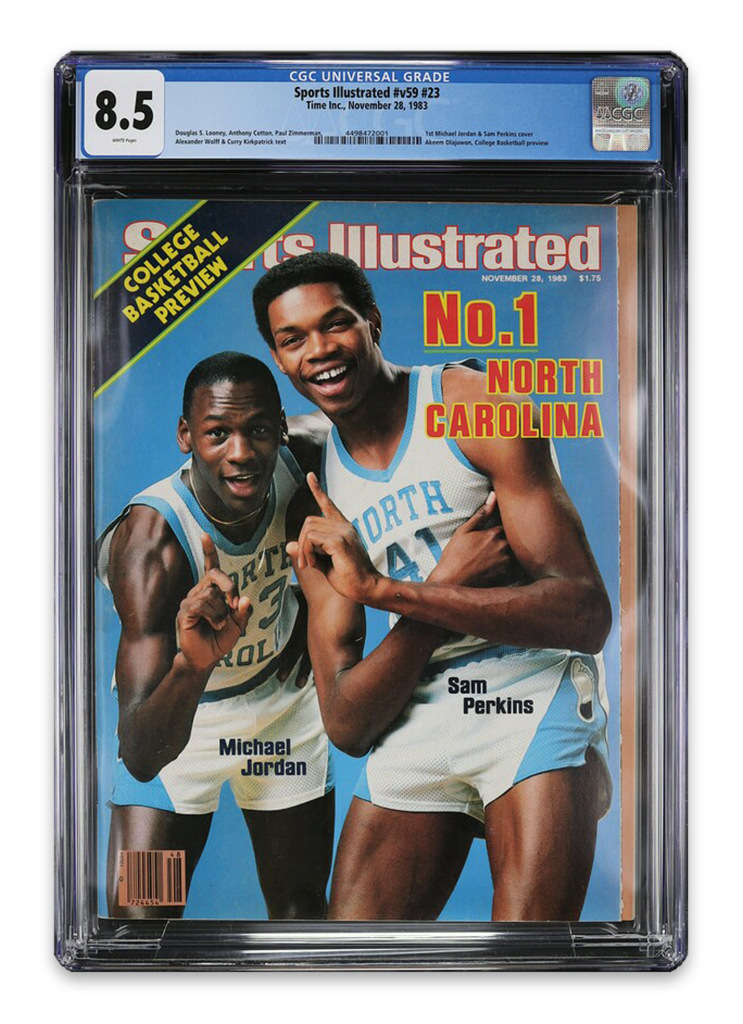
Magazines uniquely capture significant moments with impactful visuals, evoking strong emotions in fans and collectors. Like trading cards, magazines are graded based on attributes such as cover gloss, spine condition, and page quality, though the process is more complex. CGC leads the grading market, with PSA officially entering the space in July 2025.
Collectors prize magazines featuring prominent athletes, historic events, or “first appearances,” such as Sports Illustrated #1 from August 16, 1954. Sports Illustrated is the most sought-after title, along with others like Sports Illustrated for Kids, Baseball Digest, and ESPN The Magazine. Newsstand editions, free of subscription address labels, are typically more desirable and valuable on the secondary market.
For a lot more on magazine collecting and grading, see this article.
The trading card market for female athletes is experiencing unprecedented growth, with Caitlin Clark leading a new wave of collector enthusiasm. Her 2024 Panini Prizm WNBA Gold Vinyl 1/1 autograph rookie card recently sold for a staggering $366,000 USD, setting a new record for the most expensive card ever sold for a female athlete — surpassing Serena Williams’ iconic 2003 NetPro autograph patch card, which previously held the top spot at $266,400.
Clark’s meteoric rise has energized the WNBA card segment. Serena Williams remains a cornerstone of the market, her legacy cards still commanding strong prices and respect among collectors. Meanwhile, Mia Hamm’s early soccer cards — especially her 1999 SI for Kids release — continue to gain traction as interest in women’s sports expands globally.
The surge in female athlete card values reflects a broader cultural shift, with collectors increasingly recognizing the long-term value and impact of women in sports.
Some of the most popular and enduring properties in the non-sport trading card world include iconic franchises like Star Wars, Marvel Comics, and DC Comics. These entertainment properties have captivated collectors for decades, creating passionate communities around their collectible cardboard. Interestingly, the very first trading cards were actually non-sport cards, predating the sports-themed cards that many people associate with the hobby today.
One significant advantage that non-sport cards possess over their sports counterparts is stability and longevity. Characters, historical figures, and fictional subjects don’t face the unpredictable risks of scandal, career-ending injuries, or performance decline that can dramatically affect modern athletes’ card values. As collectors often say, “Superman can’t blow out his elbow,” highlighting how fictional characters maintain their appeal indefinitely without the real-world complications that can impact sports figures.
In the non-sport collecting world, what sports card collectors call “rookie cards” are instead known as “first appearances” — a term borrowed directly from comic book collecting. This terminology reflects the crossover between comic book culture and trading card collecting, emphasizing the debut of beloved characters in cardboard form.
Recently, the non-sport card market has witnessed dramatic increases in demand for certain vintage and key cards. Notable examples include the 1940 Gum Inc. Superman #1, the 1966 Topps Batman #1, the 1966 Donruss Marvel Super Heroes #34 Spider-Man card, and the 1977 Topps Star Wars #1 Luke Skywalker card, among many others. These particular cards have become benchmarks for their respective franchises and represent significant milestones in non-sport card history.
In the realm of modern card collecting, very few insert sets and parallels have achieved the legendary status and prestige of Precious Metal Gems (Upper Deck), Jambalaya (Upper Deck), and Refractors (Topps). These premium sets have become the gold standard for contemporary non-sport card collecting, commanding exceptional prices and representing the pinnacle of modern card manufacturing quality and desirability.
The non-sport card collecting community is diverse and growing, offering exciting intellectual properties for fans of all kinds.
NIL stands for “Name, Image, and Likeness,” a transformative shift in U.S. collegiate athletics that allows student-athletes to sign endorsement deals and receive compensation for the use of their personal brand — without losing their amateur status or eligibility to compete. These regulations, which took effect on July 1, 2021, have fundamentally reshaped both college sports and the trading card industry. As athletes gain the ability to monetize their likeness while still in school, the college trading card market has surged, driven by new licensing agreements and the rising popularity of star players.
Panini has capitalized on this momentum through partnerships with the Collegiate Licensing Company (CLC), which manages university logos and marks, and OneTeam Partners, a group licensing entity representing numerous athletes. Their collaboration spans physical trading cards and digital collectibles like NFTs, reflecting the industry’s embrace of modern collecting trends. Meanwhile, Topps — now under Fanatics Collectibles — has made a major push into the collegiate space. In 2022, Topps announced a sweeping agreement with more than 100 NCAA universities to produce trading cards featuring current and former athletes. This includes exclusive rights with over 35 schools such as Alabama, Georgia, Kansas, Kentucky, Penn State, and Texas A&M, allowing Topps to use official university trademarks and NIL rights. Additionally, Topps holds non-exclusive rights to create cards for athletes from more than 100 other institutions, including Duke, North Carolina, Oklahoma, and Iowa. These cards are released under the “BowmanU” brand and feature top college football and basketball stars, expanding the reach of collegiate collectibles and deepening fan engagement.
Several standout athletes have emerged as key drivers of this market transformation. Caitlin Clark, the electrifying guard from Iowa and No. 1 pick in the 2024 WNBA Draft, has become a hobby sensation. Her trading cards — especially autographs and rare inserts — are among the most sought-after, with grading services reporting a surge in submissions. Her popularity rivals top NBA prospects, and her transition to the pros has only intensified collector interest. Cooper Flagg, the Duke phenom and No. 1 overall pick in the 2025 NBA Draft by the Dallas Mavericks, averaged 19.2 points, 7.5 rebounds, and 4.2 assists per game in college. His cards tied to Duke are already commanding premium prices, with collectors viewing him as a generational investment. Arch Manning, quarterback at Texas and heir to a storied football lineage, continues to captivate hobbyists. Seen as a potential Heisman winner, national champion, and future No. 1 NFL Draft pick, Manning’s cards are hot commodities in the NIL-era boom.
The reach of NIL opportunities has extended beyond traditional revenue sports. In July 2025, hockey saw a landmark moment when Gavin McKenna, projected as the No. 1 pick in the 2026 NHL Draft, left the WHL’s Medicine Hat Tigers to commit to Penn State University under a record-setting NIL deal. This move underscores the growing influence of NIL across all major collegiate sports and its potential to reshape athlete compensation and market dynamics. Here are more details on the McKenna deal.
According to dealers, collectors, and industry insiders, athletes like Clark, Flagg, and Manning have redefined the value of college cards. Pre-professional releases now carry significant market weight, and the NIL era has unlocked new opportunities for athletes to monetize their brand — and for collectors to invest in rising stars before they reach the professional stage.
The sports collectibles market is undergoing a revolutionary transformation through emerging categories such as video game grading, ticket authentication, magazine certification, non-sport and entertainment cards, and the explosive growth of female athlete cards. These developments offer collectors new opportunities to diversify their collections.
The introduction of NIL regulations in July 2021 has fundamentally reshaped collegiate athletics and trading card markets. Student-athletes can now monetize their personal brands, creating unprecedented demand for college cards featuring stars like Caitlin Clark, Cooper Flagg, and Arch Manning.
These developments demonstrate how the collectibles industry continues to evolve and expand, offering both traditional and digital collecting opportunities that capture historic moments and emerging talent across multiple sports and entertainment properties.