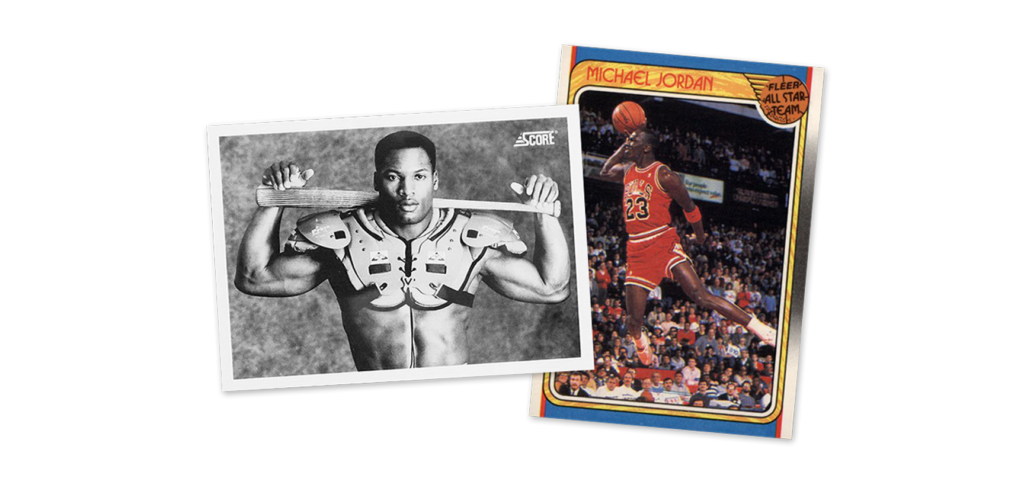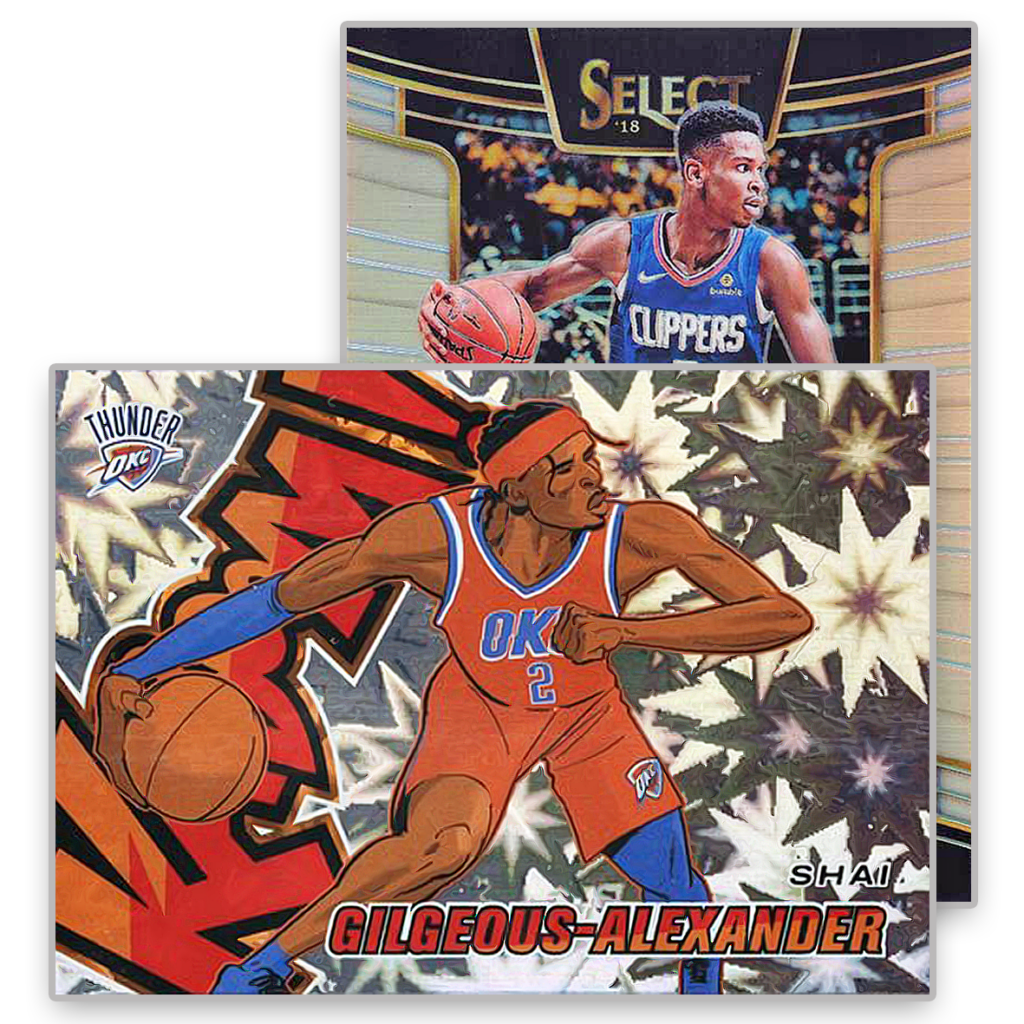
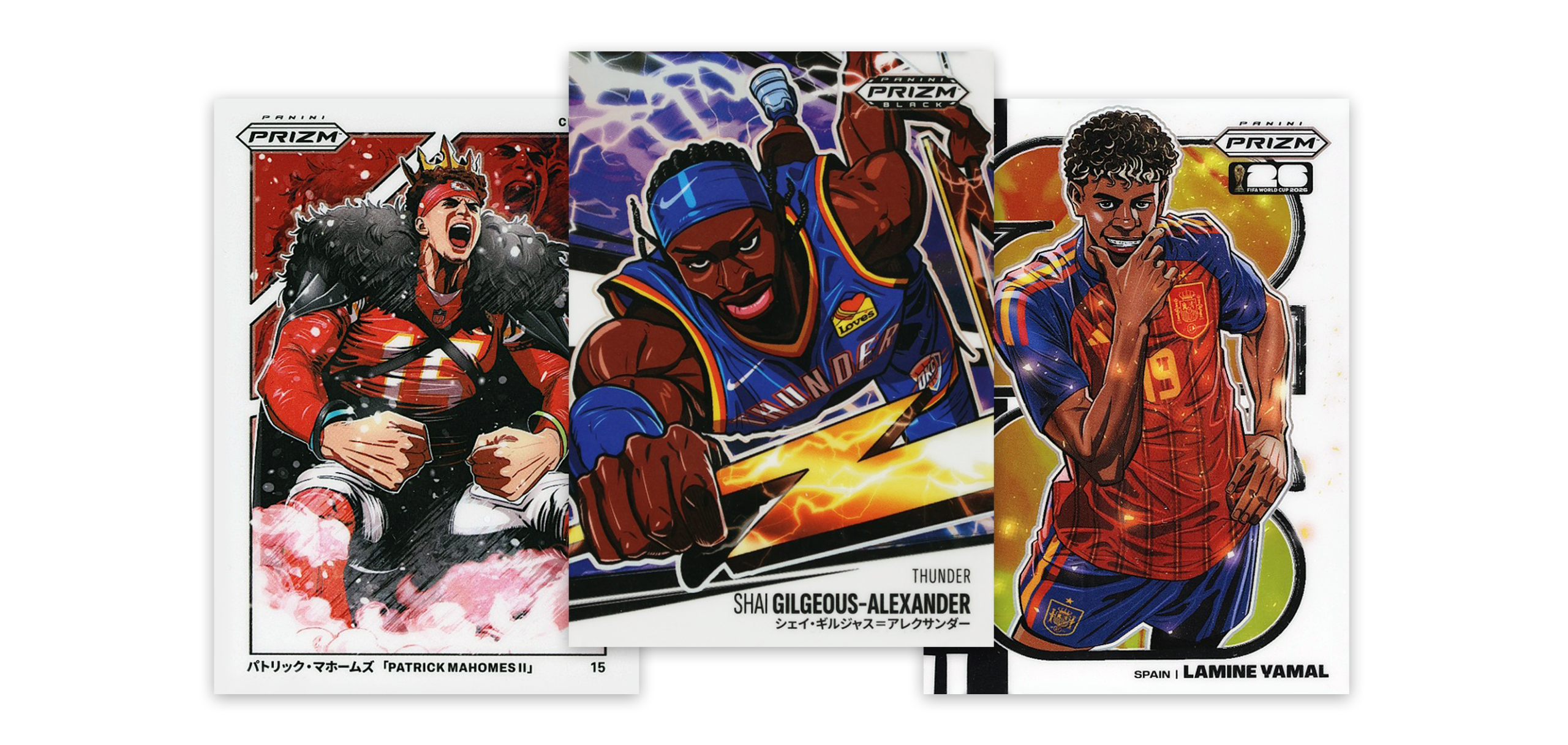
For a modern insert that didn’t even exist a few years ago, Panini’s Manga insert has rapidly become one of the hobby’s most recognizable and desirable cards.
Collectors across sports chase them, which has led to many selling for eye-popping prices that rival some of the biggest classic and modern cards in the hobby.
The secret isn’t just in this insert’s scarcity. It’s the art and the dedication of the artist behind that art.
For the past several years, illustrator BB Kei has helped shape the visual identity of many of Panini’s most sought-after Manga cards across multiple sports. While he wasn’t the original artist behind the set, he’s become one of the names collectors most associate with the insert’s rise.

BB Kei in his studio in Korea
“I’ve simply been fortunate to work on the series consistently over the past few years and contribute my own style to it,” Kei told us.
That style has resonated in a big way. Unlike your run-of-the-mill sports cards that rely on photography, Manga inserts give artists freedom to push beyond reality. A crossover dribble can become a superpower. Any athlete can get a comic-style glowup.
“Compared to athlete photography, manga-style illustration gives us almost unlimited freedom in how we can portray an athlete,” Kei said. “There are very few limits to what we can express.”
That creative freedom is exactly what makes the cards stand out in showcases, graded slabs, and auction listings.
Not Just Manga; Not Just Sports
One surprise? Kei isn’t actually a huge manga consumer.
Instead, much of his creative inspiration comes from video games.
“Games have been one of the biggest sources of motivation and inspiration for me as an artist,” he said.
The influence makes sense when you study his work. His athletes often feel larger than life, almost like playable characters from a classic 90s game like Street Fighter or sports RPG.
When creating a card, however, Kei goes deeper than style alone.
“The better I know an athlete, the more ideas I can come up with,” he explained.
Research becomes a major part of the process. Kei studies hours of game footage, photographs, signature celebrations, and even fan perception before sketching concepts. The goal isn’t simply drawing a player. It’s capturing what makes that athlete memorable.
“For action-based illustrations, researching actual game footage and photography is essential,” he said.
The Card He’ll Never Forget
When asked about his favorite project, Kei didn’t hesitate.
The World Cup Manga series sits at the top of the list.
As a lifelong soccer fan whose favorites include Ronaldinho, Adriano, and Lionel Messi, illustrating World Cup stars felt personal.
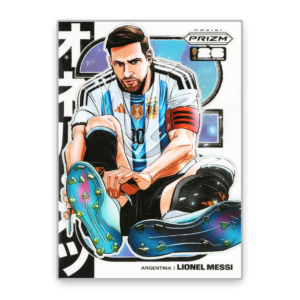
“Having the opportunity to illustrate players that I genuinely admire and then seeing those cards released as something football fans around the world could collect and enjoy was incredibly special to me.”
But when it comes to a single card, one basketball superstar stands above the rest.
“The Stephen Curry card from the 2024-25 NBA Prizm Black set” is his personal favorite.
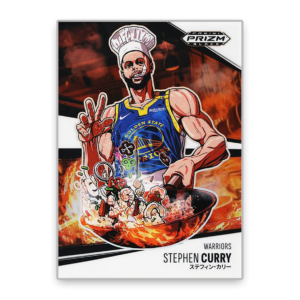
Kei says he was especially happy with how the illustration turned out, but what made it even more meaningful was the positive collector response.
“It was also one of the cards that received the most positive reactions from collectors and fans.”
The market appears to agree.
The Biggest Manga Sales Ever
If anyone doubts the cultural impact of Manga cards, the sales data tells the story.
Here are the five highest reported Manga sales to date:
- 2024-25 Panini Prizm Black Manga Stephen Curry #2 PSA 10
Sold for $48,000 on January 1, 2026 - 2024-25 Panini Prizm Black Manga Victor Wembanyama #3 PSA 10
Sold for $45,000 on May 31, 2026 - 2021 Panini Prizm Manga Tom Brady #M-TB PSA 10
Sold for $37,211 on March 14, 2026 - 2025 Panini Prizm Black Manga Pat Tillman #10 PSA 10
Sold for $35,000 on April 21, 2026 - 2024-25 Panini Prizm Black Manga LeBron James #1 PSA 10
Sold for $34,999 on November 21, 2025
The list highlights something unique about the insert.
Unlike many modern cards that depend heavily on autographs, patches, serial numbering, or rookie status, Manga cards derive much of their appeal from visual design. Collectors aren’t just buying a player. They’re buying a piece of art.
Finding a Lane in a Crowded Hobby
Kei’s path to Panini wasn’t guaranteed.
Early in his career, he wrestled with a challenge familiar to many artists: how to stand out.
“There are so many talented sports illustrators around the world,” he said.
Rather than competing directly with photographers and hyper-realistic illustrators, he leaned into something different.
He began exaggerating movement, expressions, and emotion. Sometimes the story wasn’t even centered entirely on the athlete. He looked for ways to capture what fans feel while watching sports.
“I gradually moved toward a lighter, more manga-inspired approach,” Kei said.
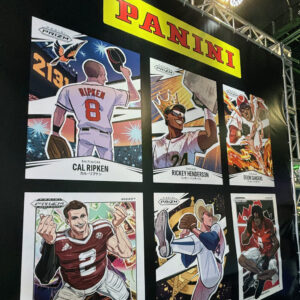
Panini booth at the 2026 National Sports Collectors Convention
At first, he worried collectors might not connect with a style that felt so unconventional.
Instead, it became his greatest strength. His work on Korean baseball and soccer cards eventually opened the door to Panini, which recognized the unique perspective he was bringing to sports illustration.
“It still feels a little surprising that the things I once worried about might be too different ended up becoming the qualities that opened one of the biggest opportunities in my career.”
More Than a Card
As Manga cards continue to shatter records and expand into new sports, collectors naturally focus on the players featured on the front.
But behind many of those cards is an artist trying to achieve something much simpler.
Kei says the reaction he values most isn’t a big sale or a social media post. It’s hearing from fans who feel he captured the athlete correctly.
“If a fan looks at one of my illustrations and feels that I really understood what makes that athlete special, that means a lot to me.”
Judging by auction results and collector enthusiasm, it’s safe to say plenty of fans believe he has.
And if Manga cards keep climbing the way they have over the last few years, the hobby may eventually view BB Kei’s artwork the same way comic book fans view legendary cover artists: not just as part of the collectible, but as a major reason people collect it in the first place.
Conor B. McGrath
Researcher, Writer
Collector since: 1992
Currently: Writer at Sports Illustrated Collectibles
Formerly: Researcher, writer, and rare collectibles analyst for Rally, focused on sports cards, comics, rare books, and watches
Fun Facts: Big basketball and Boston sports fan. Won a 7th grade basketball championship alongside 2003 NHL first-round draft pick Brian Boyle.
More: read more of Conor’s work at: https://conorcollects.substack.com/
Make us a Google preferred source