Scales of Grading
June 2 2026 by GRADEx

An informative and insightful source with a living Market Report for graded trading cards and collectibles
This chapter looks at trading cards as a legitimate alternative investment, and explains how professional grading has made the market more credible over time. You’ll build practical skills for reading secondary market data and using research tools to see how athlete performance and cultural relevance drive demand.
Key topics include:
Additionally, you’ll explore how major auction results influence secondary market valuations and learn to build frameworks for making informed investment decisions in this dynamic marketplace.
Over the past 45 years, interest and market demand for trading cards have experienced significant fluctuations. Here are key moments that significantly impacted the industry:
The trading card industry grew steadily during this period as the market matured beyond its traditional roots. A number of new manufacturers entered the space, breaking Topps’ long-standing hold on the industry. This era brought premium card sets with better print quality and more creative designs, setting the stage for the collectibles boom that followed. The added competition pushed companies to innovate in card design, packaging, and marketing.
This period brought dramatic growth in the trading card industry. Cards became widely available in mainstream retail stores, going well beyond traditional hobby shops and sporting goods stores. The market also expanded beyond sports cards to include entertainment properties, comic book characters, and pop culture franchises. Major retail chains started giving trading cards real shelf space, and the idea of cards as collectible investments started catching on with everyday consumers.
The Major League Baseball strike of 1994 hit sports card collecting hard, as fan interest in baseball dropped during the work stoppage. Around the same time, video games were on the rise, and online stock trading emerged in 1996, giving consumers and collectors new ways to spend their time and money. These alternatives started competing directly with trading cards, and collector priorities began to shift as a result.
The September 11th attacks in 2001 brought widespread uncertainty and economic anxiety that spilled over into the collectibles market, including trading cards. Consumer confidence stayed shaken, and people spent less on hobby items. The market stayed mostly flat through this period, then took another hit from the 2008 stock market crash, which hurt collectors’ disposable income and appetite for investing across the board.
This decade brought a real shift in the trading card market, driven by two main factors. Professional grading became more accepted and standardized, giving collectors trusted authentication and condition assessment, which built more confidence in high-value transactions. At the same time, social media took off, letting collectors connect worldwide, share their collections, and take part in online marketplaces and box breaks. Together, these changes led to a steady rise in market values and collector participation.
As people around the world found themselves stuck at home during the COVID-19 pandemic, many turned to nostalgic hobbies and collectibles for comfort and something to do. Both longtime collectors and brand new enthusiasts started exploring trading cards with real enthusiasm. Increased free time, stimulus money, and limited entertainment options combined to drive unprecedented demand and price increases across nearly every card category. We look at this era in more depth below.
Following the highs of the pandemic boom, the secondary market went through a sharp, widespread correction. Many cards that had hit astronomical prices in 2020-2021 saw their values drop significantly. This shift pushed a lot of the newer collectors and speculative investors who had jumped in during the boom to leave the hobby, which led to lower demand and continued price adjustments across several card categories.
The trading card market has entered a phase of steady, more sustainable growth as it settles after the pandemic boom and the correction that followed. One of the most notable developments is the extraordinary rise in interest and value of Pokémon cards, which have reached new levels of mainstream popularity and collector demand. This renewed enthusiasm comes partly from millennial nostalgia, especially among those with more purchasing power now than in their childhood, and partly from a genuine appreciation for the game’s appeal across generations. A striking sign of the market’s resurgence came in August 2025, when the 2007-08 Upper Deck Exquisite Dual Logoman autograph card featuring Kobe Bryant and Michael Jordan sold for $12.932 million. Since then, the sports collectibles market, especially the high-end ultra-rare card market for the all-time greats, has seen strong growth through 2026.
Over the past four to five years, the trading card industry has experienced unprecedented growth, with numerous record-breaking sales across both modern and vintage cards. Here are the Top 5 highest-selling trading cards of all time.
For a more complete list with additional details on each card check out Tracking the Most Valuable Cards Ever Sold, regularly updated to reflect the latest market records.
Many of these record-breaking sales involve extremely rare cards, including some that are one-of-a-kind or one-of-one. These transactions have gone through major sports memorabilia auction houses like Goldin, Heritage, Pristine, Leland’s, Robert Edwards, Alt, Classic, and eBay.
The high-end sports card market is so strong right now that even prestigious, world-renowned auction houses like Christie’s and Sotheby’s have started offering sports cards as part of their collections.
Often in auctions, bidders develop a strong attachment to an item, or a sense of ownership, before they even own it. This can lead them to value the item more than they normally would and bid higher than they planned.
People also tend to overvalue items they see as being in short supply or unlikely to come around again. On top of that, when bidders feel an item could be theirs, their brains release dopamine, the chemical tied to anticipating a reward. These factors likely play a role in the high prices being paid for sports trading cards lately.
You’ve probably heard the phrase “a rising tide lifts all boats.” That applies to trading cards too.
For example, shortly after the O-Pee-Chee Wayne Gretzky PSA 10 rookie card sold for $1.8 million a few years ago, many of Gretzky’s other cards, especially from the early 1980s, jumped in value by as much as five times. When a card gets priced out of reach for most collectors, they move on to the next best options.
Determining the value of your trading cards is not as straightforward as it might seem. Here are several methods collectors and investors use to assess their cards’ worth:
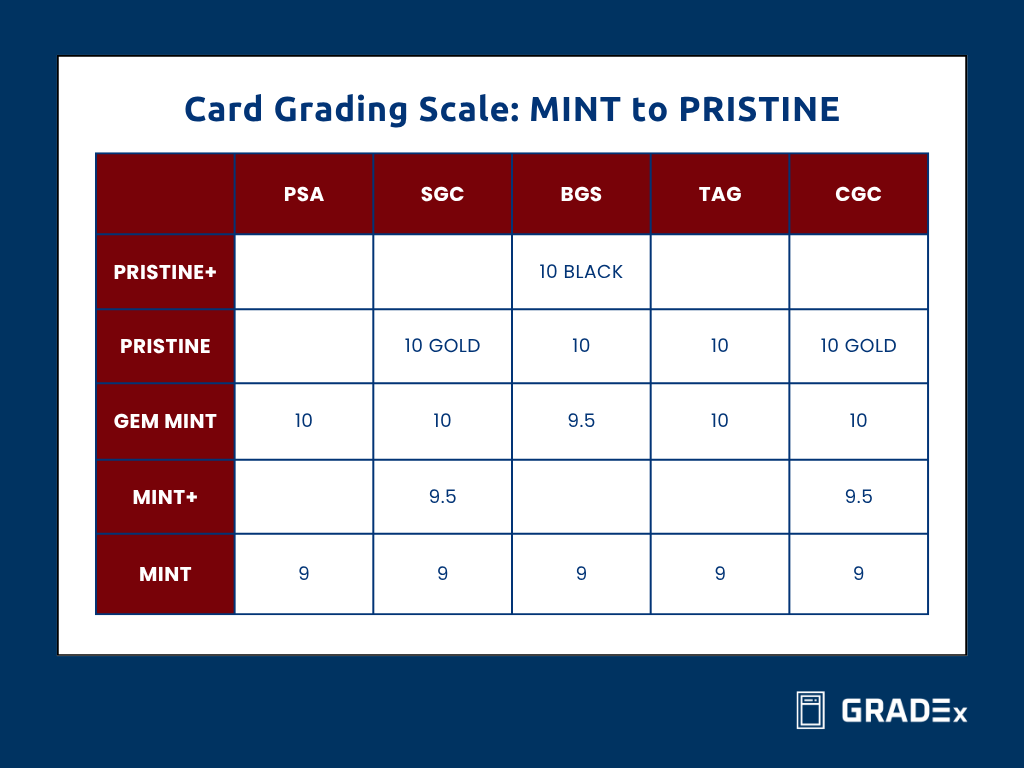
Cards graded by the four major grading companies (PSA, SGC, BGS, TAG and CGC) are easier to price accurately because their condition is not in question.
The trading card market is increasingly seen as “art for the new generation.”
Many enthusiasts describe trading cards as “cultural assets,” a term that covers nostalgia, design, style, and scarcity.
For people who’d rather not put money into stocks or real estate but still love sports, trading cards offer a way to follow their favorite teams and players while investing in athletes at the same time. Collecting trading cards is a bit like building a dream fantasy sports team, where the value of your cards shifts over time based on how the players perform.
Because sports are unpredictable, the trading card market stays dynamic. Whether you collect future Hall of Famers or rookies just starting out, there’s always some risk in how a player’s career will turn out. But higher risk comes with the potential for higher reward, especially for collectors and investors who do their homework and find undervalued players or cards.
As covered in the chapter on the cultural impact of trading cards, major investment firms are now adding high-end trading cards, and companies connected to them, into their portfolios, putting in tens of millions of dollars.
Other things that draw investors to trading cards include scarcity, demand, popularity, player performance, and player relevance, things like media presence, social media activity, reality TV appearances, and documentaries.
As we covered in the previous chapter on grading, protecting your collectibles with proper insurance is a key part of responsible collecting that a lot of enthusiasts overlook. Having the right coverage can mean the difference between a minor setback and a devastating financial loss.
Standard homeowner’s or renter’s insurance often provides limited coverage for collectibles and may not reflect their true market value. Specialized collectibles insurance accounts for the unique nature of these items, including how their value fluctuates and the expertise needed to assess and replace them properly.
If you’re looking into insurance for your collectibles, here are a few things worth considering:
Get your collectibles professionally appraised by certified specialists every 3 to 5 years, and keep detailed records, including photos, purchase receipts, certificates of authenticity, and condition reports. Store this documentation separately from your collection, ideally in cloud storage or a safety deposit box. Good documentation matters both for filing claims and for establishing value.
Standard homeowner’s insurance offers minimal protection for collectibles, so it’s worth looking into a collectibles-specific policy or a scheduled personal property endorsement. Look for “agreed value” or “guaranteed replacement cost” coverage, which protects against theft, damage, loss, and mysterious disappearance. Some insurers focus on specific categories like fine art, coins, or trading cards, and offer more complete protection for those items.
Store your collection properly with climate control, UV protection, and the right materials, and install security systems or use safes for high-value pieces. Many insurers offer discounts for these kinds of protective measures. Check your coverage every year, keep an eye on market values, and update your policy when you add new pieces or when items go up significantly in value.
For more specific details about protecting your collectibles, please review our feature titled ‘If Something Happened to You Tomorrow, Would Your Collection Be Protected?‘
Fractional investing let everyday collectors own a small piece of cards that would otherwise be out of reach. Instead of one person owning a rare card outright, a platform would buy it and sell shares, letting hundreds or thousands of investors split the cost.
Rally was the biggest name in this space. One of its best known deals was a 1979-80 Topps Wayne Gretzky rookie card graded PSA 10, one of only two cards ever to receive that grade. Rally sold shares at $40 each, and 1,633 investors bought in before the offering sold out. Shareholders could hold their shares, trade them during periodic windows, or vote to accept a buyout if someone offered to purchase the whole card.
The space has cooled off a lot since its pandemic-era peak. Several platforms didn’t survive: Collectable collapsed after running into financial trouble, leaving investors in ongoing legal disputes over its assets, and Mythic Markets and Koia both shut down. Otis was absorbed into the trading app Public.com. In 2026, even Rally began stepping back from the fractional model, partnering with the marketplace Alt to sell off much of its inventory through direct buyouts rather than fractional shares.
Fractional investing proved there was real appetite for owning a piece of legendary cards, and it helped drive interest and prices higher across the hobby. But it also came with real risks, thin trading windows, subjective valuations, and platform instability, and the model has largely given way to more traditional buying and selling.
Let’s start by looking at the market spike of 2020 and 2021, and the factors behind why interest in trading cards surged so much during the pandemic.
In the previous chapter on eBay, we saw the huge sales growth the hobby had in 2020. We also looked at how athletes and celebrities started collecting and sharing their items with fans on social media.
A new, younger wave of collectors pushed auction prices for rare, high-end cards to levels no one had seen before. Even at the grassroots level, big box stores across North America were selling out of packs.
With more new collectors, and more free time on their hands, interest in online content about trading cards grew a lot too.
One of the clearest signs of where the market stands is attendance at the National Sports Collectors Convention, known as The National, held every year in late July. It has now set attendance records for several years running. The 2025 show in Rosemont, Illinois drew more than 100,000 collectors, and the 2026 show topped that with more than 130,000 attendees over its five days, making it the largest in the event’s 46-year history.
The COVID-19 pandemic changed all our lives, and some of that change is permanent. The business world shifted too, in some ways for better and in others for worse, and the sports trading card industry was no exception. Collectors had already seen a steady rise in the market for three or four years before “the day sports shut down,” March 12, 2020.
In the weeks after that, the secondary market dipped briefly as collectors weren’t sure what would happen next. But with no sports on TV, no fantasy sports, no sports gambling, and people stuck at home, things started to shift. Casual sports fans, not necessarily collectors, discovered box breaks on social media. Some of them, while spring cleaning, dug up their old cards and started wondering what card collecting was like these days.
With extra time, and in some cases extra money, these fans found their fantasy and gambling fix in sports trading cards instead.
When you think about it, that’s really what card collecting is. You’re putting together a team of your favorite players, like a fantasy roster. You’re betting on the future of young players by investing in rookies and up and comers. And opening a pack of cards is a bit like buying a lottery ticket.
The trading card industry has picked up real attention from mainstream financial media, with both Bloomberg and CNBC producing coverage that highlights how much the sector has changed. That kind of attention from major business news outlets marks a real turning point for what used to be seen as a niche collectibles market.
The fact that major financial broadcasters are putting airtime and resources into covering trading cards shows how far the industry has come, from a childhood hobby to something treated as a legitimate alternative investment. This kind of coverage points to a market that’s more sophisticated, more liquid, and drawing in a wider range of investors than ever before.
When established financial outlets cover trading cards alongside traditional investments, it’s a sign the industry has reached a new level of credibility and maturity. The coverage reflects both the serious money now tied to premium cards and the growth of professional grading services, auction houses, and trading platforms that have turned this into a real, structured market.
The trading card market has changed a lot since the 1980s, and it reached new heights during the 2020 pandemic, when lockdowns created the perfect conditions for the market to explode. Sports fans with extra time and money discovered box breaks on social media and dug up their old collections, driving auction prices for rare cards to record levels, with headline sales becoming almost routine and outlets like Bloomberg and CNBC covering the trend.
That growth was partly helped along by fractional investing platforms like Rally, which let multiple investors own a share of a single high-value card and opened up access to collectibles that were once out of reach for most people. Not every platform survived the ride. Collectable, one of the early names in the space, ran into serious financial trouble and its assets have been tied up in legal disputes since. The category as a whole is shifting too.
Traditional price guides and book values have had a hard time keeping up, since cards now work more like alternative investment assets, with prices set by auction results and real demand rather than old pricing charts.
The National Sports Collectors Convention has kept setting attendance records year after year, breaking the long-standing 1991 record back in 2023 and continuing to grow since, with the 2026 show drawing more than 130,000 people. That kind of turnout says a lot about how much the market has changed in how cards are viewed, valued, and traded today.
—
Next, Chapter 8: Digital Collectibles, Emerging Markets & NIL