Card grading has become a cornerstone of the trading card industry. It gives collectors a standardized way to evaluate cards, builds trust, and makes buying and selling easier for everyone involved.
That said, opinions on which grading company is best can vary widely. And those opinions don’t always account for the full picture.
In this piece, we look at five major grading companies: PSA, SGC, BGS, TAG, and CGC. We break down their expertise, years in the business, grading scales, holder features, current market standing, and what they charge for their services. Along the way, we cover which company grades the most cards, which ones have the strongest security features, which are on the rise, and which are facing headwinds.
The companies below are ranked by how long they have been grading trading cards.
NOTE: information has been updated as of July 15, 2026. Latest updates to this story are highlighted in bold.

PSA – Professional Sports Authenticator
In business since: 1991
Cards graded in 2024: 15,340,000 / 1st rank (source: GemRate)
Cards graded in 2025: 19,260,000 / 1st rank (source: GemRate)
“Value” pricing / turnaround time: $32.99 per card / halted at this level (effective June 2, 2026)
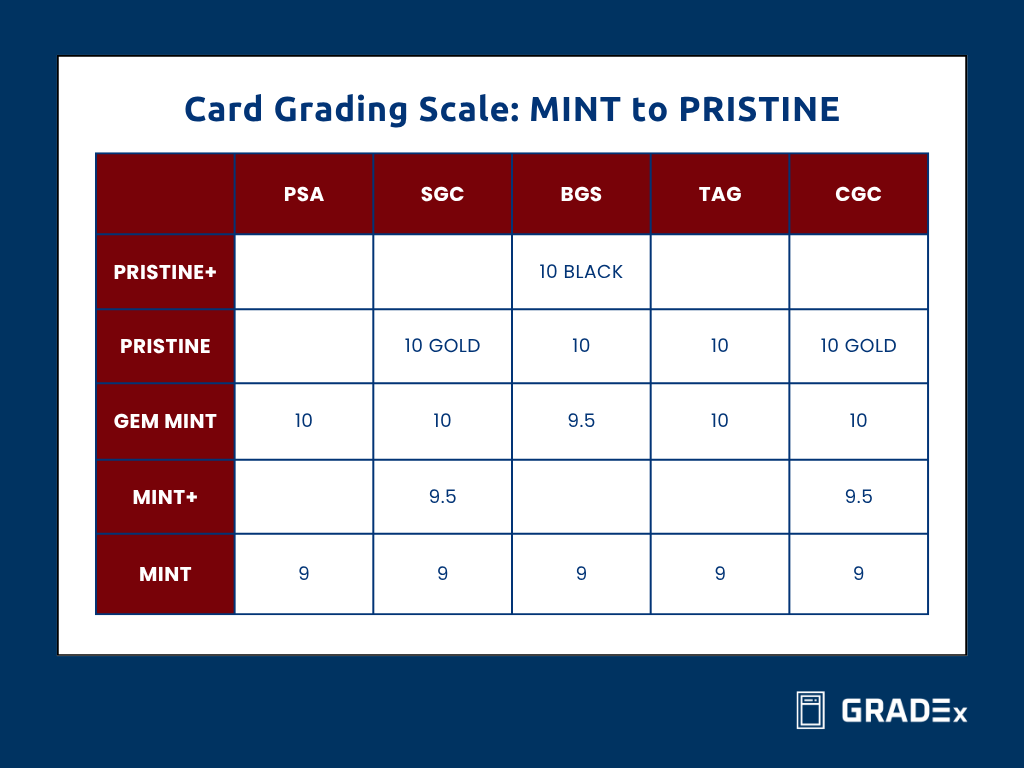
Grading scale, Mint 9 and up: Mint 9, Gem Mint 10
Holder:
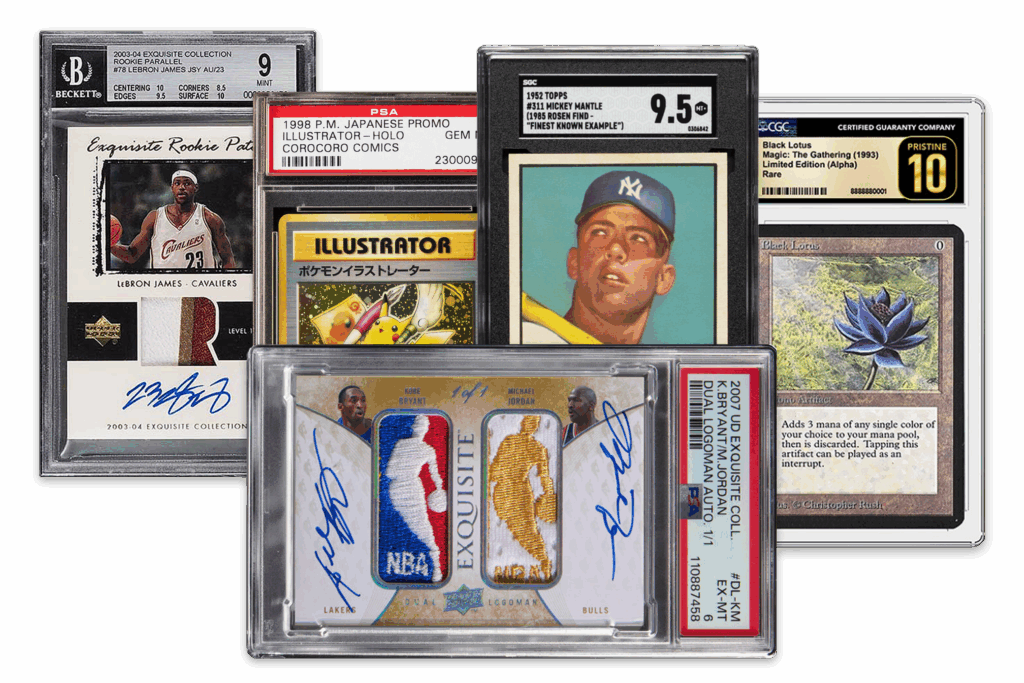
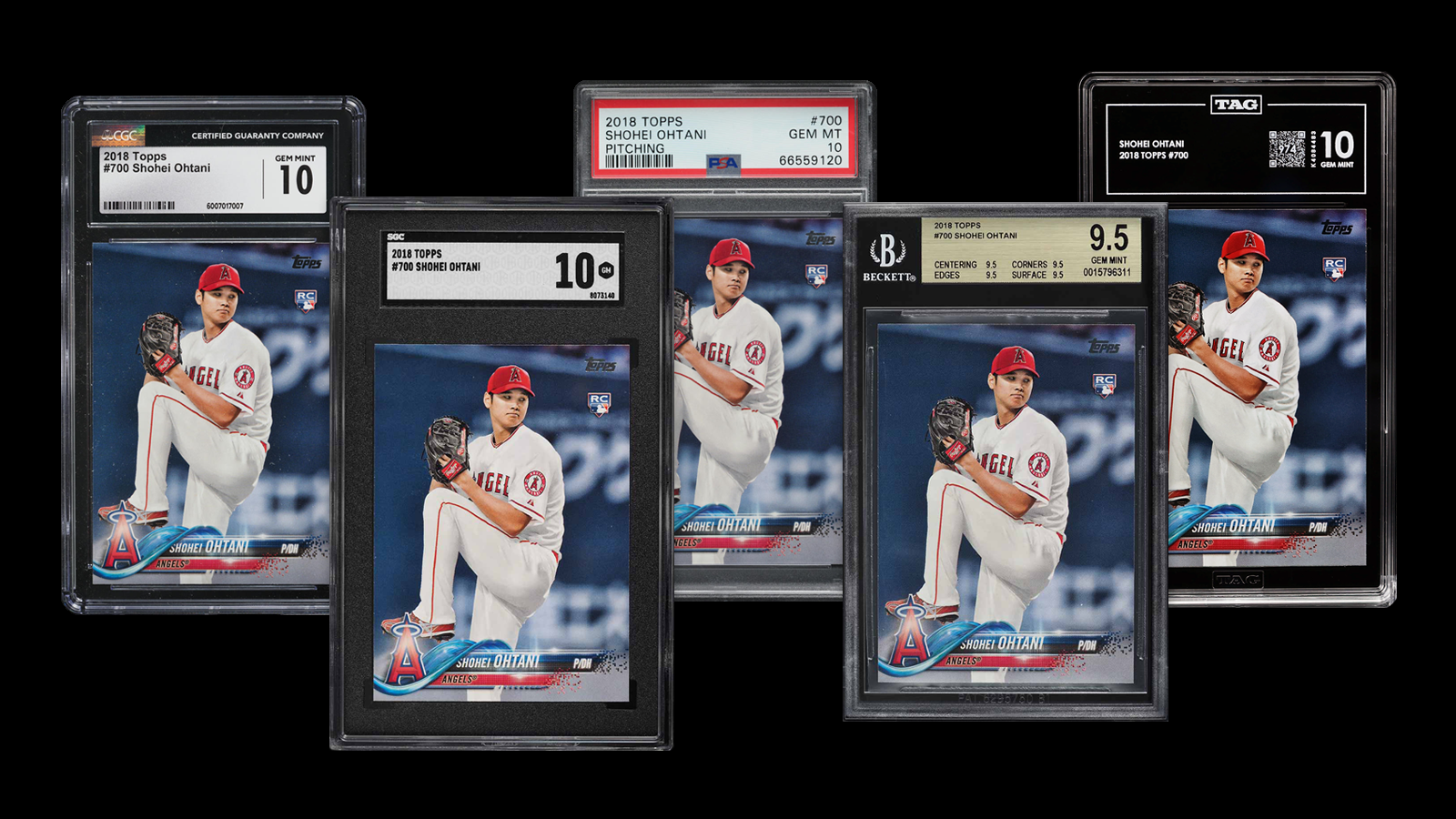
PSA holders are made from clear, tamper-evident plastic and feature a label with a red trim. This label displays the card’s grade, description, a unique certification number and a bar code. Modern PSA holders are constructed from durable, medical-grade plastic that is resistant to scratches, UV light, and environmental factors such as heat and humidity. Over the years, PSA has implemented numerous updates, incorporating holograms and other security features to enhance authenticity.
Pros:
PSA is the clear industry leader in terms of cards graded and resale value achieved in the secondary market. One of its standout features is the PSA Set Registry, which allows collectors to organize, track, and showcase their collections. PSA also provides collectors with excellent technology tools through its app, offering convenience and functionality. Another significant benefit is the PSA Guarantee. In short, PSA stands behind its authentication and grading standards. If an error is confirmed under their terms, PSA will compensate you by either buying the card or refunding the value difference. It’s a financial backstop on their grading work, not a promise of a specific grade outcome. Here are the full details from the PSA website. Additionally, over its three decades in business, PSA has maintained a clean and consistent design for its holders and labels. This gives them a distinctive and professional appearance that collectors widely recognize and appreciate.
Cons:
One drawback for customers is the possibility of being charged up-charges if the estimated market value of a graded card exceeds certain thresholds after grading. This can lead to unexpected costs and may deter some collectors. Another limitation is the absence of a Mint+ (9.5) grade in the grading scale, which could provide a finer distinction between high-grade cards. Additionally, the lack of a Pristine grade further reduces the ability to differentiate between top-tier cards. Collectors have also noted that the font size of the numerical grade on the label is relatively small, making it difficult to read from a distance and less practical for display purposes. Furthermore, many collectors are not in favor of the use of qualifiers, such as “OC” (Off-Center) or “MK” (Marked), which can complicate valuation and pricing, as they introduce additional layers of subjectivity into the process (learn more about PSA qualifiers here).
Market:
PSA has firmly established itself as the market leader across nearly all categories, including modern and vintage cards, in sports, non-sport and trading card games (TCGs). PSA-graded cards consistently command the highest resale values in comparable grades, further reinforcing the company’s dominant position in the industry. The term ‘PSA 10’ has become synonymous with a Gem Mint card, much like ‘Scotch Tape’ is synonymous with transparent adhesive tape. This reputation for excellence has made PSA the preferred choice for collectors seeking both credibility and maximum value from their graded cards.
Latest news:
On May 28th, PSA announced that they have paused four service levels due to their growing backlog of 10 to 14 million cards. They are hoping to reduce the backlog to 5 million, which they estimate can take up to four months. Here are the full details.
On May 14th, PSA announced that they are planning to hire across the organization, adding up to 1,000 new positions to assist with grading, quality control, research and assembly operations. Here are the full details.
On December 15, 2025, Collectors, PSA’s parent company, has acquired Beckett Collectibles, LLC, including Beckett Grading Services (BGS). For complete coverage of this developing story, see the full feature on Sports Collectors Daily. Collectors previously acquired SGC in February 2024. Since that acquisition, SGC has experienced a steady decline in both resources and grading volume. See more below.

SGC – Sportscard Guaranty Company
In business since: 1998
Cards graded in 2024: 2,320,000 / 2nd (source: GemRate)
Cards graded in 2025: 1,420,000 / 3rd (source: GemRate)
“Standard” pricing / turnaround time: $15 per card / 75+ business days (estimated)
Grading scale, Mint 9 and up: Mint 9, Mint+ 9.5, Gem Mint 10, Pristine 10
Holder:
SGC holders are renowned for their distinctive and sophisticated appearance. Often referred to as ‘The Tuxedo,’ the holder features a bold black insert that creates a striking contrast, elevating the card’s visual appeal. The label at the top displays the card’s grade, description, and unique certification number in a sleek, modern font. Collectors frequently appreciate the minimalist elegance of SGC slabs, which have established a unique identity within the grading industry. A particularly appealing feature is the gold trim on the label used for Pristine 10 cards, adding an extra touch of prestige.
Pros:
SGC is known for its firm and consistent grading standards, earning a strong reputation for reliability among collectors. The company is widely recognized for its exceptional customer service, setting a high benchmark for responsiveness and support within the industry. While SGC is particularly respected in the vintage card market, it has been steadily gaining traction and trust in the modern card segment. Many of the hobby’s most valuable cards are encapsulated in SGC holders, further enhancing its credibility. Known for delivering the fastest turnaround times in the industry, SGC remains a top choice for collectors who prioritize efficiency and quality. Additionally, SGC distinguished itself as the first grading company to provide digital imaging with every card graded, offering an added layer of customer service and security.
Cons:
The black ‘tuxedo’ holder used by SGC is a distinctive feature that evokes mixed reactions among collectors. While some appreciate its sleek and elegant design, others find it less appealing compared to the more conventional styles offered by competitors. Although the holder has gained recognition for its unique aesthetic, it lacks some of the advanced security and technology features provided by other grading companies.
Market:
SGC has long enjoyed strong acceptance in the secondary market for vintage cards, solidifying its reputation among collectors who value consistency and reliability in grading. Over the past four to five years, the company has made significant strides in the modern card segment, steadily increasing its market share and expanding its influence across the broader trading card industry.
Latest news:
In February 2024, SGC was acquired by Collectors, Inc., the parent company of PSA, marking a pivotal moment in its history. Despite this acquisition, SGC has maintained its independence, continuing to operate under its existing management team while leveraging the expertise and resources offered by Collectors, Inc.
In late July 2025, PSA president Ryan Hoge made a significant announcement regarding the future direction of SGC, revealing that the company is strategically repositioning the grading service as a specialized “boutique” brand. This decision appears to be a deliberate shift toward scaling down SGC’s operations, focusing on creating a more exclusive and premium grading experience rather than competing in the high-volume market segment.

BGS – Beckett Grading Services
In business since: 1999
Cards graded in 2024: 657,000 / 4th (source: GemRate)
Cards graded in 2025: 824,000 / 4th (source: GemRate)
“Base” pricing / turnaround time: $17.95 per card (w/ subgrades) / 75+ business days (estimated)
Grading scale, Mint 9 and up: Mint 9, Gem Mint 9.5, Pristine, Pristine+ (Black Label)
Holder:
The BGS holder is designed with a distinct labeling system that reflects the card’s grade. Silver foil labels are used for cards graded between 1 and 9, while gold foil labels are reserved for cards graded 9.5 or 10, signifying higher quality. The most prestigious distinction is the black label, awarded exclusively to cards that achieve the Pristine+ grade, symbolizing flawless condition and rarity. One of BGS’s standout features is the inclusion of subgrades, which provide a detailed breakdown of the card’s condition in key areas such as centering, corners, edges, and surface. This added layer of transparency gives collectors deeper insights into how the overall grade was determined. The holder itself is well-regarded for its solid, ‘chunky’ design, which offers a sense of durability and quality. Additionally, each card is encapsulated in a sealed protective sleeve within the holder, providing extra defense against environmental damage and wear, further ensuring the card’s preservation.
Pros:
BGS enjoys strong brand recognition and a respected legacy rooted in the contributions of Dr. James Beckett, a pioneering figure in the hobby whose influence remains significant. The durability and innovative features of BGS holders are a major advantage, setting a high standard for card protection and presentation. Among its most distinguished offerings is the coveted Pristine+ Black Label, widely regarded as the finest and most sought-after grade in the industry. This exclusive grade symbolizes perfection, significantly enhancing the value and prestige of the cards that earn it. Additionally, BGS made history as the first grading company to introduce autograph card grading.
Cons:
BGS has faced some challenges, but these also present opportunities for growth. One noted drawback is the absence of a Mint+ (9.5) grade, which could provide more precision for high-grade cards. While subgrades offer detailed insights, some collectors find them overly complex, leading to variability in secondary-market values between ‘strong’ and ‘soft’ subgrades. Additionally, BGS has struggled to establish a strong presence in the vintage card market, partly due to concerns about certifying cards believed to be cut from uncut sheets (these are now starting to be noted on the label as “Hand-Cut”). Recent grading scale changes, later rescinded following collector feedback, highlight BGS’s willingness to adapt. Despite these challenges, the company remains a respected name in the hobby with room to strengthen its position further.
Market:
From 2000 to 2016, BGS was widely regarded as the market leader in grading modern cards, earning this position through its advancements in services and its commitment to transparency. As mentioned above, the company introduced many innovative features, which resonated with collectors and set new industry standards. Its consistent grading practices and trusted reputation made it a go-to choice for modern cards during this period. However, recent marketing, customer service and PR blunders, along with ownership scandals, have raised concerns within the hobby, temporarily overshadowing its legacy and prompting questions about the company’s direction moving forward. Despite these challenges, BGS remains a respected name in the grading industry, with the potential to rebuild and solidify its standing among collectors.
Latest news:
Collectors Holdings, PSA’s parent company, has acquired Beckett Collectibles, LLC, including Beckett Grading Services (BGS). For complete coverage of this news, see the full story at Sports Collectors Daily.
On May 12, 2026, Beckett announced changes and improvements to their label and holder. You can read the full details here.

TAG – Technical Authentication & Grading
In business since: 2013
Cards graded in 2024: 240,000 / 5th (source: GemRate)
Cards graded in 2025: 440,000 / 5th (source: GemRate)
“Basic” pricing / turnaround time: $22 per card / currently at capacity, halted at this level
Grading scale, Mint 9 and up: Mint 9, Gem Mint 10, Pristine 10
Holder:
TAG holders are sleek, modern and highly data-driven in presentation. The slab is designed around tamper-evident protection and a digital-first experience, with each card tied to a detailed grading report and a highly precise score on TAG’s 1000-point score (found in the QR code on the front of the card), in addition to the standard 10-point grade scale. TAG does not use a standard label to identify the card on their holders, the card information is actually printed on the inside of the holder. The overall look is more tech-forward than traditional, which fits TAG’s brand identity well.
Pros:
TAG’s biggest strength is transparency. The company gives collectors a far more detailed breakdown than a standard 1-to-10 grading scale, which helps show exactly how the final score was reached. Its quantitative approach also appeals to collectors who want consistency and objectivity rather than the more subjective feel of traditional grading. For modern collectors, especially those who like data and imaging, TAG offers a polished and innovative experience.
Cons:
The biggest obstacle TAG faces is market acceptance. It still trails the established leaders in resale strength, and many buyers are more comfortable pricing PSA, SGC, BGS or CGC slabs. The 1000-point scoring system can also create a learning curve for collectors used to traditional grading, which may limit broader adoption in the secondary market. There are submission limitations worth knowing as well. TAG only grades cards from 1989 to present across all categories, including sports, non-sport, and TCGs. Cards must also be no thicker than 50 points, which rules out memorabilia cards entirely. Die-cut cards, acetate cards, and lenticular cards are not accepted either. TAG has the technology. Now it has to earn the hobby’s trust and prove itself where it counts most: liquidity and long-term collector confidence.
Market:
TAG is best seen as a rising player in the grading space, not just another alternative. It positions itself as “technology-first, human verified,” and has built a genuine following among collectors who care about precision, transparency, and presentation. While it has not yet reached the resale consistency or broad hobby acceptance of the top brands, it is clearly moving in that direction. TAG tends to shine with modern cards, TCGs, and collectors who want a more data-driven grading experience. The brand has real momentum behind it, and some notable cards have been going through TAG lately, like the 1998 Pokemon Pikachu Illustrator. The market is watching closely, and early signs suggest that resale confidence is starting to follow.
Latest news:
TAG has reported a major surge in demand, saying submission volume is up 831% since January 2025 and that it is operating at maximum capacity. That growth has pushed turnaround times higher and led to adjustments in some service tiers and pricing. TAG Canada also says a new submission portal is coming in late 2026, which suggests the company is continuing to expand its footprint.
With PSA’s parent company acquiring Beckett, TAG stands as one of the two major card grading companies that remains independent from Collectors Holdings.

CGC – Certified Guaranty Company
In business since: 2021
Cards graded in 2024: 1,870,000 / 3rd (source: GemRate)
Cards graded in 2025: 4,920,000 / 2nd (source: GemRate)
“Economy” pricing / turnaround time: $20 per card / 65 business days (estimated)
Grading scale, Mint 9 and up: Mint 9, Mint+ 9.5, Gem Mint 10, Pristine 10
Holder:
CGC holders are designed to provide protection while remaining visually appealing for display. The holders feel sturdy and durable, with well-designed labels featuring modern compact fonts and black trim. Each label includes detailed card descriptions, a unique certification number, and multiple security measures such as microprinting, UV ink, holographic foil, and a QR code for verification. Cards that achieve the CGC Pristine 10 grade receive a distinctive gold-foil label to highlight their exceptional condition.
Pros:
CGC stands out for its advanced features and strong reputation in the grading industry. The company offers a Set Registry that allows collectors to organize and showcase their collections, and it notably grades error and mis-cut cards that appeal to niche collectors. Backed by its parent company, the leader in comic book and magazine grading, CGC brings extensive expertise across sports, non-sports, and trading card games, with additional credibility from its head sports grader who formerly ran BGS. CGC holders feature some of the strongest security measures in the industry, with many hobbyists considering them among the most well-constructed and durable holders available.
For collectors who prefer to minimize paperwork, CGC offers a free service called Quick Submit. This service streamlines the online submission process by allowing you to submit items based on quantity and declared value rather than entering individual card details. After selecting “Quick Submit Authentication & Grading” and your grading tier, you simply indicate how many items you’re sending by category and their maximum declared values. For full details visit CGC’s Quick Submit page.
Cons:
CGC has made notable progress in the sports card market since entering the segment in 2021. The company has updated its holder and label designs several times, each change reflecting an effort to sharpen its overall presentation. A recent recall of roughly 1,500 potentially counterfeit Pokémon cards was a challenge, but it also showed that CGC is willing to address problems directly and protect its reputation in its strongest category, TCGs.
Market:
CGC has built a solid reputation in the secondary market for TCGs, Pokémon cards, and non-sport cards, and has become a go-to choice for collectors in those categories. Its presence in the sports card secondary market is still developing, but there is real room for growth as more collectors turn to CGC for their sports cards. That growth reflects rising confidence in what CGC brings to the table, including strong holder security features, a clean design, and a quality feel. Collectors also appreciate the company’s consistent and transparent grading process.
Latest news:
With PSA’s parent company acquiring Beckett, CGC stands as one of the two major card grading companies that remains independent from Collectors Holdings.
Conclusion:
After looking at the top five grading companies, each one brings something different to the table. PSA leads in market dominance and resale value. SGC stands out for vintage cards and faster turnaround times. BGS offers detailed subgrades and the well-known Black Label. CGC and TAG have built a strong reputations in TCGs, backed by solid security and technology features.
The best grading company really comes down to what you are collecting and what matters most to you. Whether that is maximum resale value, quicker service, detailed condition analysis, or expertise in a specific category, knowing the differences helps you make smarter decisions as the hobby keeps changing.
For the formal grade definitions from the Big Five grading companies, review our Scales of Grading feature.
Image sources: Fanatics Collect, TAGgrading.com
If you liked this report, sign-up for our GRADEx Files newsletter here. It is published twice a month.

GRADEx Staff
This story is a team effort. Our writers, editors, and hobby experts worked together, researching and reporting to bring you this piece.
Make us a Google preferred source