Non-sport cards used to be an afterthought. For decades they sat in showcases next to the so-called “real” hobby, the baseball, basketball, football and hockey cards everyone chased. That’s not the case anymore. Non-sport and entertainment cards are now one of the fastest-moving corners of the entire collectibles market, and the last few weeks alone have been wild. This isn’t an overnight thing either. The market has been building strength for the past three to four years.
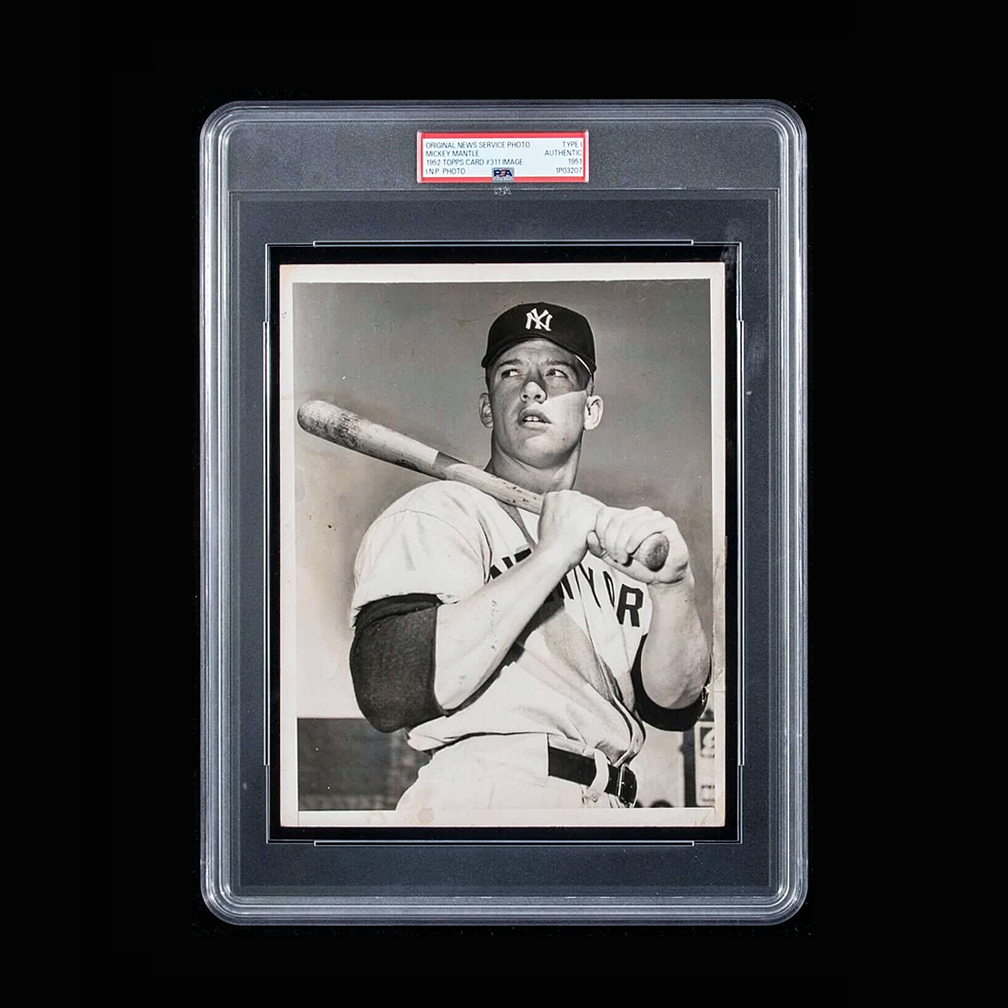
Most sports cards fluctuate in demand depending on player performance. Once a player retires, that demand fades over time, maybe with a small bump if they make the Hall of Fame. There are only so many Mantles, Jordans, Gretzkys, and Bradys.
Pop culture figures are different. New generations keep buying into their popularity and their backstories, so the demand sticks around. New movies and shows constantly bring in fresh interest.
The Market Data
Here are some recent examples of extreme price jumps of key non-sport cards.
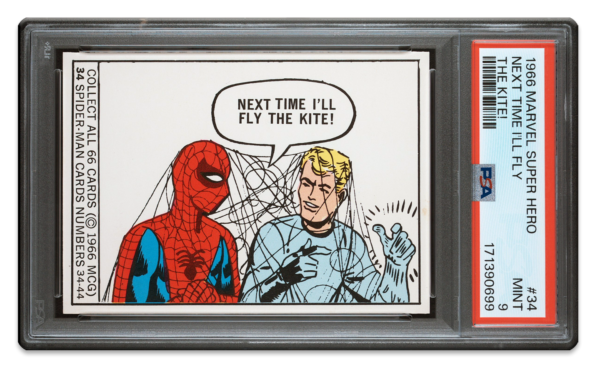
Start with Marvel. A 1966 Donruss Spider-Man #34, the card collectors treat as Spider-Man’s first-ever appearance, sold for $175,100 on August 16th, 2026, the day many believe changed everything. This sale was a huge jump from the $5,500 the same grade brought back in 2023. That single sale reset the entire Donruss set, with a PSA 8 copy going for $50,000 (after selling for only $6,600 in November 2025) and a PSA 7 copy going for $35,000 (up from $2,700 less than a year ago).
Modern Marvel has been steadily heating up too. A rare Black Wave parallel of the UK-only 2024 Topps Chrome Marvel Spider-Man #1, numbered out of 10 in PSA 10, sold for $95,000. The Mask Off Superfractor insert from that release produced a Captain America 1-of-1 that sold for $91,500. And a Doctor Doom Superfractor from 2026 Topps Finest brought in $18,000.
We’ve seen this Marvel story before. During the 2020 to 2022 pandemic boom, Marvel-mania took over the hobby, driven mostly by 2013 and 2017 Precious Metal Gems, along with 1990 Impel Marvel Universe.
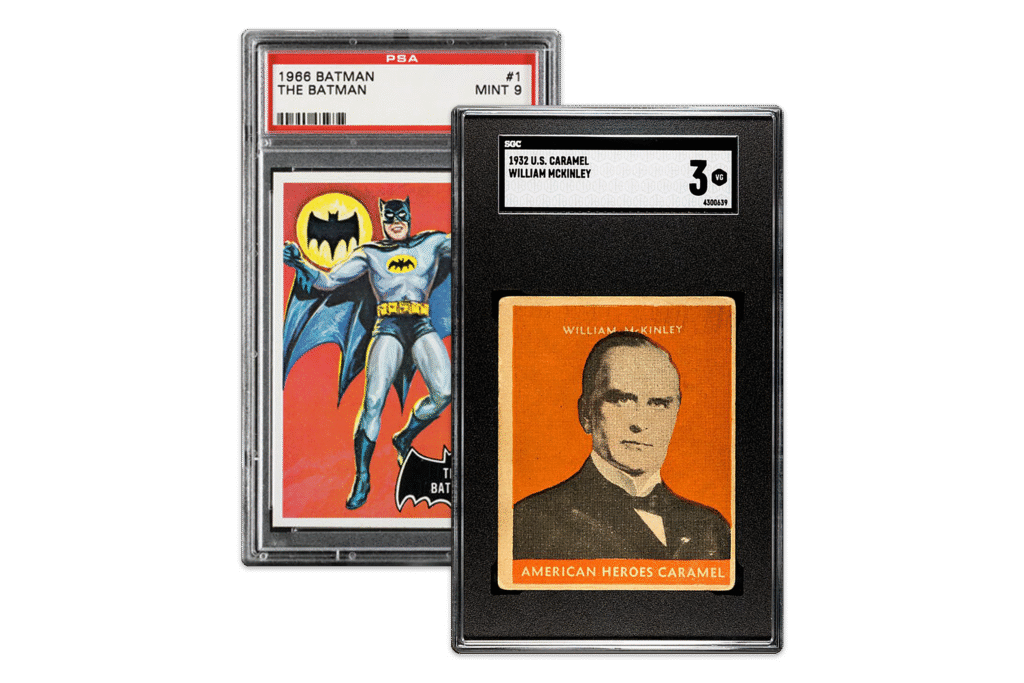
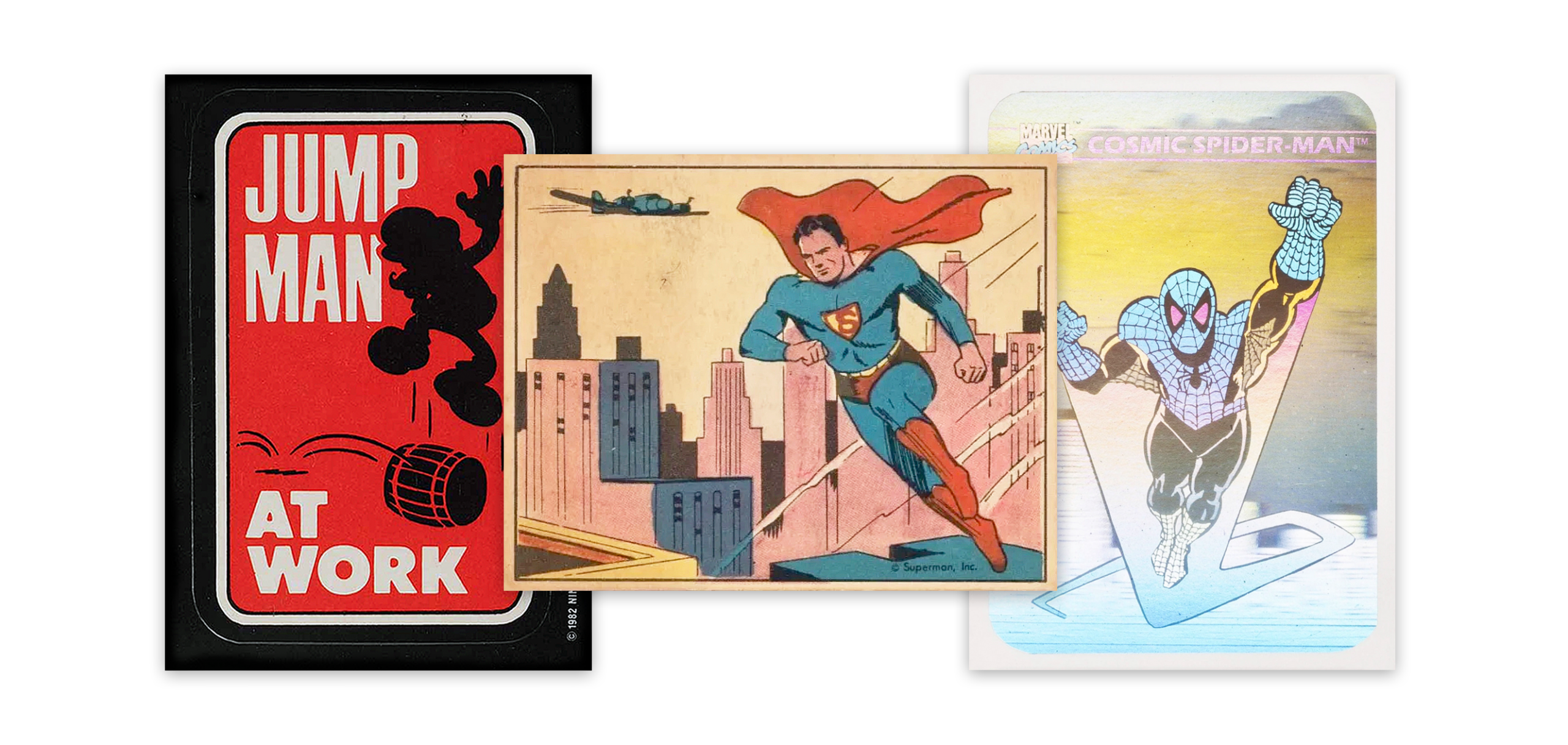
DC is moving fast as well. A PSA 6 copy of the 1966 Topps Batman #1 sold for $14,000 after 70 bids on eBay, a card that was trading around $3,000 just six weeks earlier. The 1940 Gum Inc. Superman set, one of the first superhero card sets ever made, keeps setting records too, with multiple copies of card #1 selling in the $12,000 to $18,000 range for low-grade copies in recent weeks.
Star Wars is still one of the strongest pillars in the category. The flagship 1977 Topps #1 Luke Skywalker card, treated as Luke’s rookie, sold for $687,500 in PSA 10 grade through Heritage Auctions this past May, shattering a record it had set just months earlier.
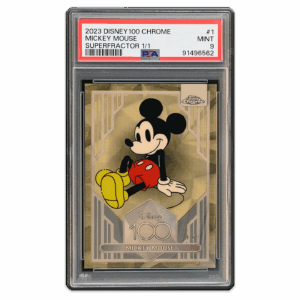
Disney is arguably the biggest story of all. The 2023 Topps Chrome Disney 100 (another limited UK-only release) Mickey Mouse Superfractor, a 1-of-1 in PSA 9, sold for $500,000 in October 2024. It’s now listed for sale again at $20 million, a number that is continuing to drive up the entire Disney 100 checklist, including a Red & Black Wave Mickey, numbered to 23, that sold for $72,000. Singer Josh Groban recently posted that he pulled a 1-of-1 Mickey Mouse Superfractor from the newest Disney Chrome release, proof of just how far this hobby has crossed into mainstream pop culture. Vintage is feeling it as well. A 1931 Wills Cinema Stars card of Walt Disney with Mickey Mouse in PSA 9 sold for a record $122,000, up from a previous high of $40,000 just a couple years earlier.
Wrestling continues to produce record sales too, headlined by a recent sale of The Rock and “Stone Cold” Steve Austin dual autograph Superfractor that reached $82,825, one of the biggest wrestling card sales ever recorded.
Video games are in the mix too. The 1982 Topps Donkey Kong “Jump Man at Work” card, the first North American set to feature the character who would become Super Mario, has climbed to around $1,800 in PSA 9, with a $25,000 bounty out on the lone PSA 10. Even The Simpsons is feeling the effect, with a PSA 9 Bart Simpson “Bartman” sticker #1 jumping from around $400 to $2,725 in a matter of weeks.
Why Is This Happening Now?
None of this is happening in a vacuum. Media is doing a lot of the heavy lifting behind these numbers. Spider-Man: Brand New Day crossed $2 billion at the worldwide box office in just three weeks, making it the second-fastest film ever to hit that mark behind only Avengers: Endgame. That timing lines up directly with the surge in Spider-Man card prices across every era. X-Men ’97 Season 2 landing on Disney+ has pulled fresh attention toward Wolverine, and Avengers: Doomsday buzz has already started pushing Doctor Doom cards much higher, months before the movie even arrives.
Media used to mean newspapers, radio and TV. Now it’s all amplified by the power of the Internet, social media and massive platforms like Facebook, YouTube, Instagram, TikTok, Netflix, etc.
Some experts also point to “sports card fatigue” as a reason collectors are exploring non-sport cards. There are so many new sets, so many sports, so many parallels, that people are looking for something different. Pop culture figures like Spider-Man, Batman and Luke Skywalker don’t suffer slumps or injuries. They offer long-term stability and a different kind of emotional connection than athletes do. On top of that, we’re in the middle of several major anniversaries: Captain America’s 85th, Transformers’ 40th, and next year marks Star Wars’ 50th.
The August 16th ’66 Spider-Man sale sent a clear signal to both the sports card and TCG markets: non-sport cards now have top-end liquidity, kicking off a strong market push for key non-sport cards.
Scarcity in Grading, For Now
Lower population numbers are one of the biggest reasons non-sport and pop culture cards are climbing so fast. Sports cards have decades of organized grading behind them. Collectors have submitted the same iconic rookie cards over and over since the 1990s, so PSA and other grading companies have huge population reports to work from. Non-sport cards never got that treatment.
For most of the hobby’s history, non-sport cards were seen as a side category, mainly sold as complete sets at shows and in shops. When they were originally released, kids opened them, played with them, and threw them away just like sports cards, but almost nobody thought to preserve them for the long term. There wasn’t a resale market pushing people to keep wax boxes sealed or store cards in top loaders. That means far fewer high-grade survivors exist today, especially from the 1960s through the 1980s.
Even the idea of which cards are most desirable, like a character’s first appearance or a rookie card, isn’t as clear-cut as it is in sports cards. That hierarchy is also constantly evolving.
Set structure plays a role too. Sports card companies built their business on annual releases. Every year meant a new set, new rookies, and a fresh wave of cards hitting the market. Over time, that built up deep population numbers. Non-sport properties almost never worked that way. With a few exceptions, a movie or TV show got one card set tied to its release, and that was it. No yearly refresh, no ongoing chase. Star Wars, Batman, and Superman only got a handful of sets across multiple decades, so the supply pool never got big enough for high grades to become common.
That’s why a single fresh submission can flip the population report overnight in this category. A card that was a “PSA 9, one of three” last year might suddenly become “one of five” once a new batch comes back from the grading company, and prices react fast. That volatility cuts both ways. It’s part of why a single sale can spike prices so hard, but it also means we still don’t really know where the ceiling on true rarity sits in this category. We probably won’t find out anytime soon either, since most grading companies are still working through delays and backlogs.
More Exciting Stuff on the Horizon
Licensing moves are adding more fuel to the fire. Upper Deck just signed a multi-year deal with Hasbro covering Transformers, Power Rangers, G.I. Joe, M.A.S.K., and Jem and the Holograms, starting with a Transformers 40th Anniversary set hitting Target in September. Panini has confirmed Sonic the Hedgehog cards are coming, timed to Sonic’s 35th anniversary, with a full slate of chase inserts like Color Blast and Kaboom.

Topps, meanwhile, continues to roll out new products through its relatively recent entertainment licenses with Disney/Pixar/Marvel (acquired September 2024), WWE (January 2025), and Nickelodeon/Paramount (spring 2025).
With three of the four major sports league licenses (NFL, MLB and NBA) now with Topps, and the NHL with Upper Deck, Panini and Upper Deck are leaning heavier than ever into non-sport and entertainment properties.
Conclusion
Non-sport and pop culture cards are no longer riding on the coattails of sports cards. They have become their own force, driven by scarcity, a wave of blockbuster movies and shows, and collectors who grew up loving these characters just as much as any athlete. With more licensing deals on the way and grading companies still catching up to demand, this corner of the hobby looks far from finished. If anything, the last few weeks may end up looking like the top of the first inning.
To review some of the biggest non-sport sales of all time, check out our feature report.
Images: PSAcard.com, Upper Deck, Panini America, GRADEx archives

GRADEx Staff
This story is a team effort. Our writers, editors, and hobby experts worked together, researching and reporting to bring you this piece.
Make us a Google preferred source