A trading card is just a small piece of cardboard, right? But hold the right one in your hand, and it feels like something more. That’s the strange power of sports photography. A great photo can turn a simple stat line into a special memory.
Think about what a great sports photo actually captures. It’s not just a player standing there. It’s a loaded swing about to explode. A raw reaction after a big play. These are the images that fans want to hold onto, literally. That’s why certain cards stop being pieces of cardboard and start being cultural symbols.
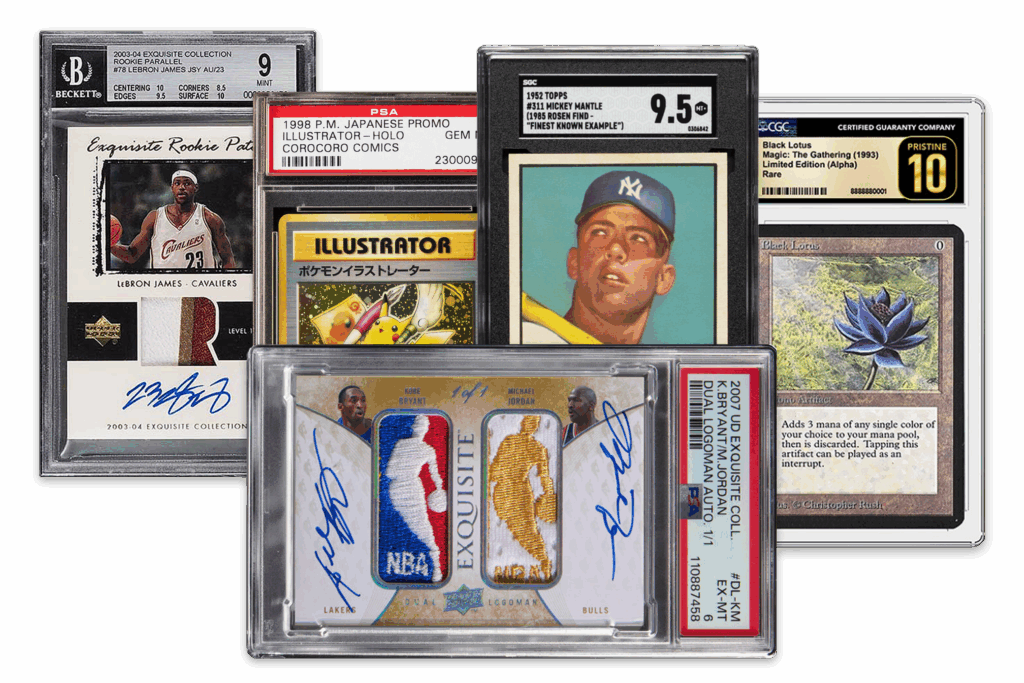
Take the 1952 Topps Mickey Mantle. The photo is simple: a clean portrait, bright colors, an almost storybook look to it. But that image has become a visual representation for an entire era of baseball. When people picture postwar baseball in their minds, there’s a good chance they’re picturing something close to that card.
Take the 1989 Upper Deck Ken Griffey Jr. rookie card. Most people don’t know the real story behind that photo. Upper Deck needed a shot of Griffey in a Mariners uniform, but no photo like that existed. His card ended up being the last one finished before the set went to print. A Sports Illustrated photographer named V.J. Lovero was shooting Griffey’s father on a day off and decided to bring Junior into the session too. The problem was that Griffey was wearing his San Bernardino Spirit uniform in the original photo. Upper Deck’s team had to add a Mariners logo onto the cap using an early graphics system called Scitex, since this was over a year before Photoshop existed. That patched together image ended up building Upper Deck’s reputation and made Griffey the face of a new era in premium baseball cards.
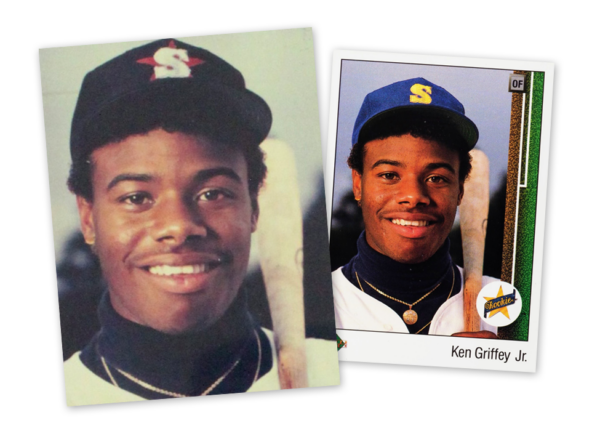
For a while, people believed the famous ’89 Griffey card came from a Polaroid photo. That idea picked up steam after a Polaroid sold at a Memory Lane auction in 2018 for $14,000. It turned out that theory wasn’t true. The Polaroid was just an archive piece Upper Deck used internally to reference the photo during production, not the source image itself.
Here’s the part that makes the whole thing come full circle. Griffey and fellow Mariners rookie Randy Johnson, both stars of that same 1989 Upper Deck set, have spent their retirements on the other side of the lens. Griffey picked up a camera not long after he stopped playing in 2010, and he’s since worked the sidelines at the Home Run Derby, NFL games, an Inter Miami match with Lionel Messi on the field, and even The Masters. NBC Sports and The Masters built a special around his second career, called Photographer No. 24. Johnson went a similar route. He studied photojournalism at USC before baseball took over his life, and once he retired in 2010 he went back to it, shooting NFL games, spring training, and wildlife in Africa. He was even named one of Sports Illustrated’s top sports photographers in 2020. Two men who were once frozen in the frame as young players are now the ones deciding how other athletes get remembered.
Behind the cards themselves are specialist photographers whose work quietly shapes the look and feel of the hobby. Doug McWilliams spent decades shooting for Topps, and his work is a big reason so many classic cards still hold up today. Walter Iooss belongs in that conversation too, even though his career was built mostly at Sports Illustrated. Iooss has appeared on more than 300 Sports Illustrated covers, more than any other photographer, and has spent over sixty years shooting nearly every major athlete of his era. His use of light and shadow earned him the nickname the “Rembrandt of sports photography.” His influence reached the card world directly, too.
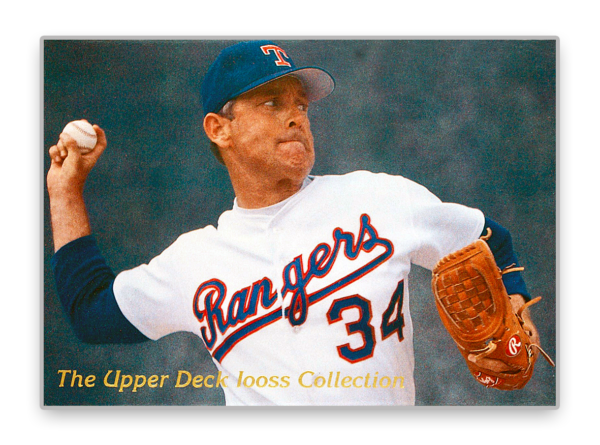
Upper Deck released a set in 1993 called The Upper Deck Iooss Collection (above), and collectors still mail him cards to sign, wanting his signature rather than the athlete’s. That’s a rare thing in this hobby, a photographer becoming the reason a card matters.
Hockey has its own version of Doug McWilliams and Walter Iooss, and his name is Bruce Bennett. He started shooting Islanders games back in 1974, and since then he’s covered more than 6,000 professional games and 45 Stanley Cup deciding games. Getty Images bought his archive in 2004 and made him director of hockey imagery, and in 2025 he became the first photographer ever inducted into the United States Hockey Hall of Fame. A lot of memorable hockey card photography carries his fingerprints, and several members of the GRADEx team can speak to that firsthand. They worked with Bennett directly between 1999 and 2005, when Upper Deck and In The Game were building out their hockey card photography.
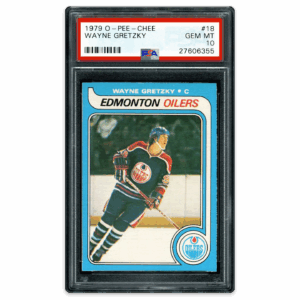
Curious who shot the famous photo used on the 1979-80 Wayne Gretzky rookie card? That credit goes to Steve Babineau, a photographer from Boston. He took the picture during a game between the WHA Edmonton Oilers and the New England Whalers, in what turned out to be the WHA’s final season. Here are the full details on that memorable photo, and where the original slide sits today (via Sportsnet).
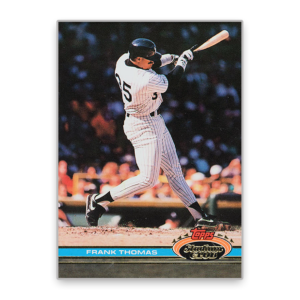
Topps introduced Stadium Club in 1991 as a response to Upper Deck’s growing popularity. The set stood out right away for its photography, but it also featured better print quality, a premium feel, and a more modern look than most cards at the time. Topps partnered with Kodak for the imaging and printing process. The set was marketed around Kodak’s image technology and premium photographic paper, instead of ordinary card stock. It changed expectations for what a baseball card could be, and the brand remains an important part of Topps’ lineup today.
So why does photography matter so much to collectors? A few reasons keep coming up. There’s the simple visual appeal, since a sharp, well-composed photo looks better in the hand and in a display case. There’s memorability, since the best images freeze a moment fans already loved. There’s market value, since cards with standout photography of big-name athletes can sell for more. And there’s the emotional pull, since a great photo can bring back a memory of watching that player live.
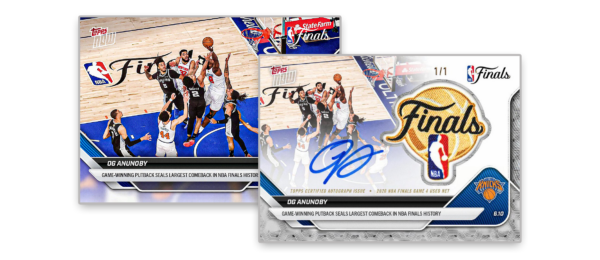
A newer example shows how fast this instinct has moved. When OG Anunoby’s game-winning tip-in capped the largest comeback in NBA Finals history in June 2026, Topps released a Topps Now card of the moment, and it was on sale within hours. The photo on the card came from Joe Murphy, who caught Anunoby tipping in a Jalen Brunson miss at Madison Square Garden to put the Knicks up 3 games to 1 over the San Antonio Spurs. The shot instantly went viral, and Topps sold over 105,000 copies of the card in just a few days. They also released a one-of-one version with a piece of the actual net (and net patch) worked into the card. That says a lot about how much weight collectors put on a single frozen image of a moment they just watched happen.
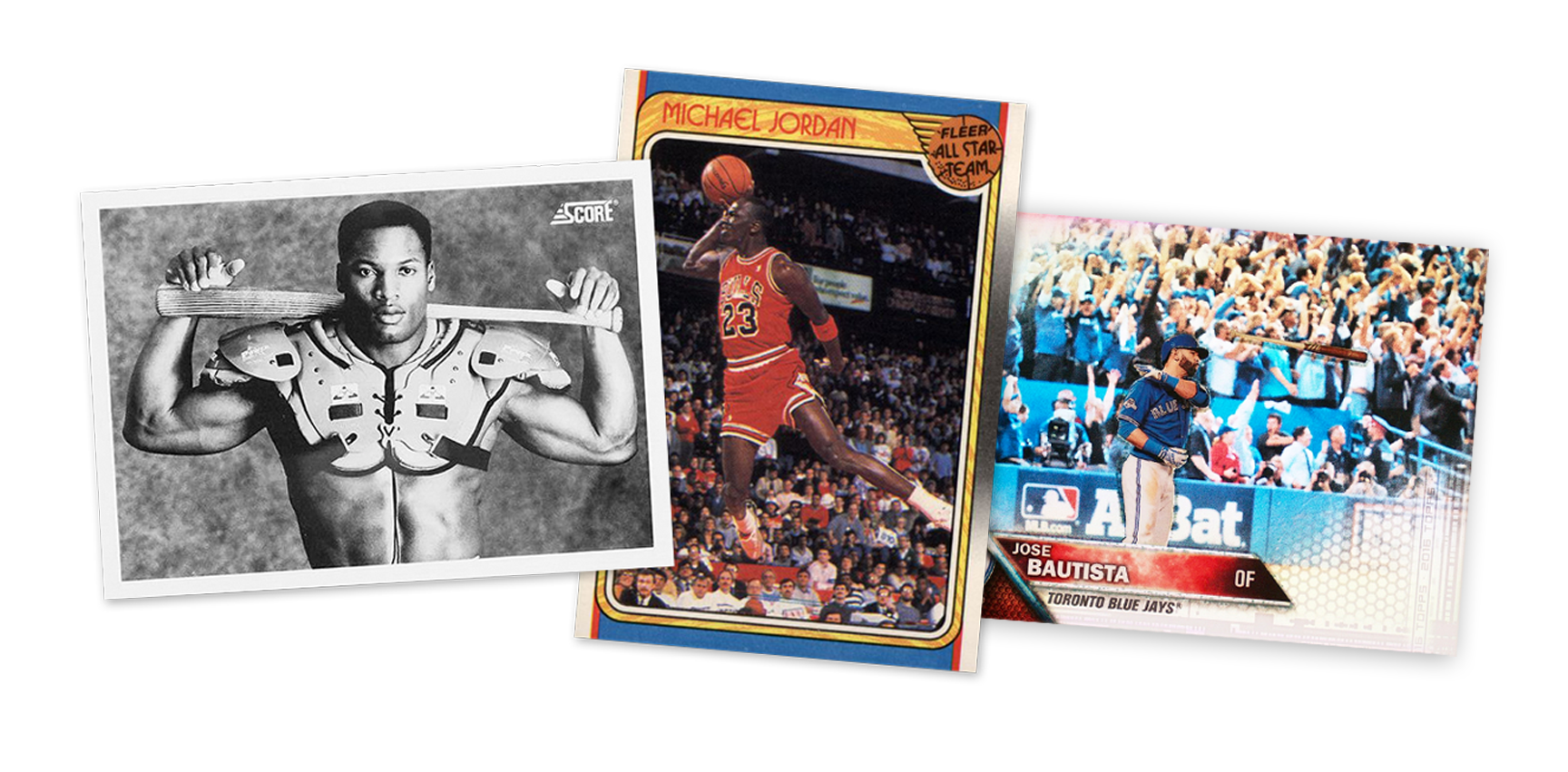
You can see this pattern across some of the hobby’s most beloved cards. Here are a handful of other cards that are famous for their imagery:
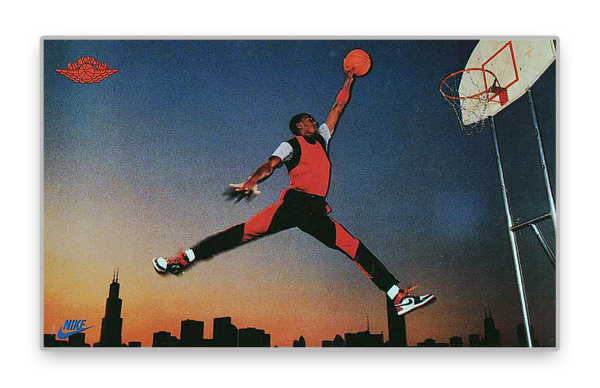
The 1985 Nike Promo Michael Jordan, jumpman.
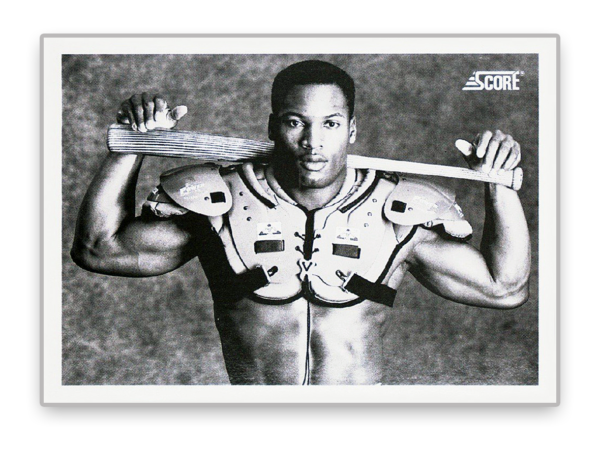
The 1990 Score Bo Jackson, “Ballplayer.”
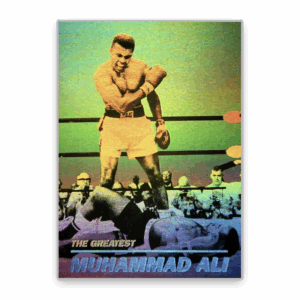
The 1991 Kayo Holograms Muhammad Ali, knocking out Sonny Liston.
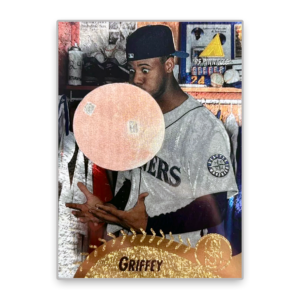
The 1995 Pinnacle Ken Griffey Jr., bubble gum.
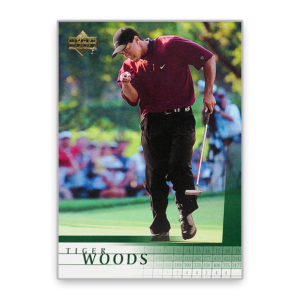
The 2001 Upper Deck Tiger Woods, pointing at the hole at The Masters.
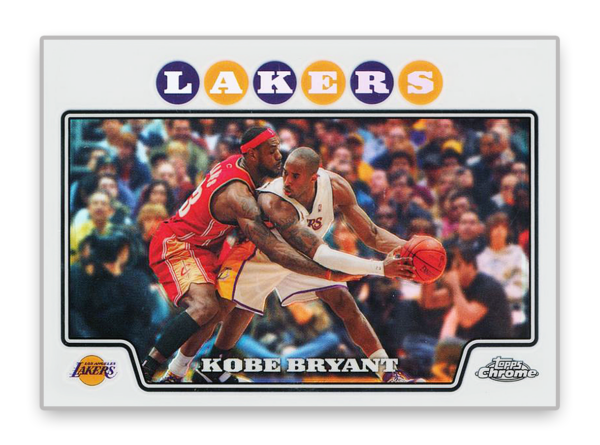
The 2008-09 Topps Chrome Kobe Bryant, vs LeBron James.
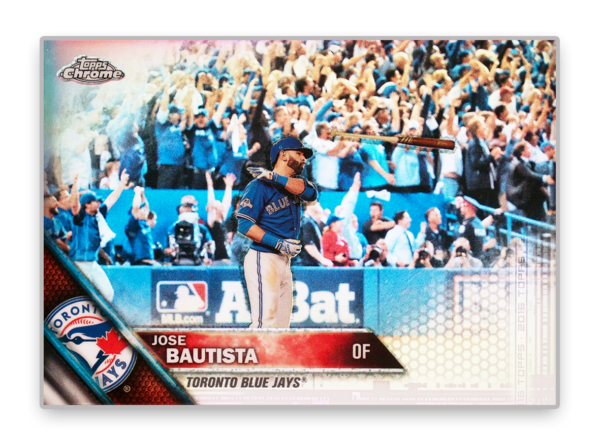
The 2016 Topps Chrome Jose Bautista, bat flip.
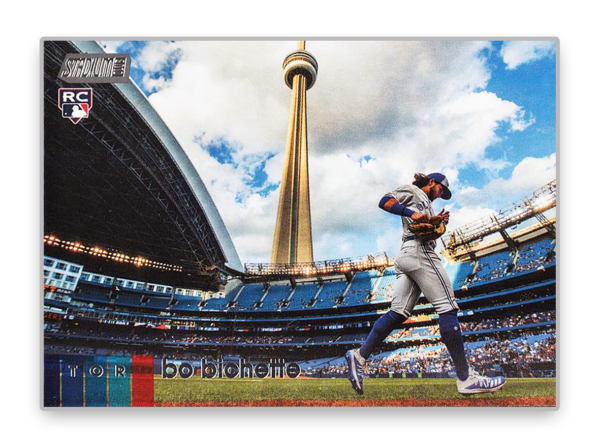
The 2020 Topps Stadium Club Bo Bichette, with the CN Tower in the background.
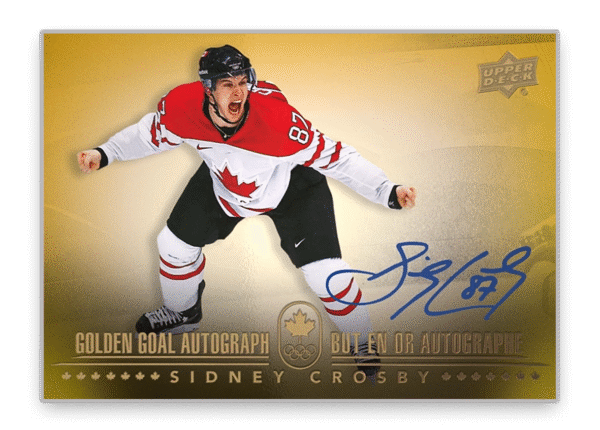
The 2025-26 Upper Deck Tim Hortons Team Canada Sidney Crosby Golden Goal Autograph.
In nearly every case, it’s the photo that people talk about first, not the set name or the design around it.
That’s the real power of photography in this hobby. Design styles and concepts come and go. Trends shift from year to year. But a photo that captures the right moment lasts, and sometimes the person behind that moment ends up picking up a camera of their own.
What cards do you remember most for their incredible photography?
Images: GRADEx archives, Fanatics Collect, Topps, Upper Deck, eBay, Memory Lane Auctions, Heritage Auctions

GRADEx Staff
This story is a team effort. Our writers, editors, and hobby experts worked together, researching and reporting to bring you this piece.
Make us a Google preferred source