Patrick Stewart gave collectors two characters they could build a collection around. As Captain Jean-Luc Picard in Star Trek and Professor Charles Xavier in X-Men, he played leaders who valued understanding, fairness and compassion. His performances made both characters feel familiar, even to viewers who had little interest in science fiction.
Stewart died on October 28th at the age of 86. For the trading card and collectibles hobby, his passing brings renewed appreciation for a career represented by early movie cards, scarce autographs and memorable screen-used props.
Born in Mirfield, Yorkshire, in 1940, Stewart grew up with very little opportunity, until an English teacher encouraged his interest in Shakespeare. He later attended the Bristol Old Vic Theatre School and joined the Royal Shakespeare Company, years before television introduced him to a worldwide audience.
His First Cards & Autographs
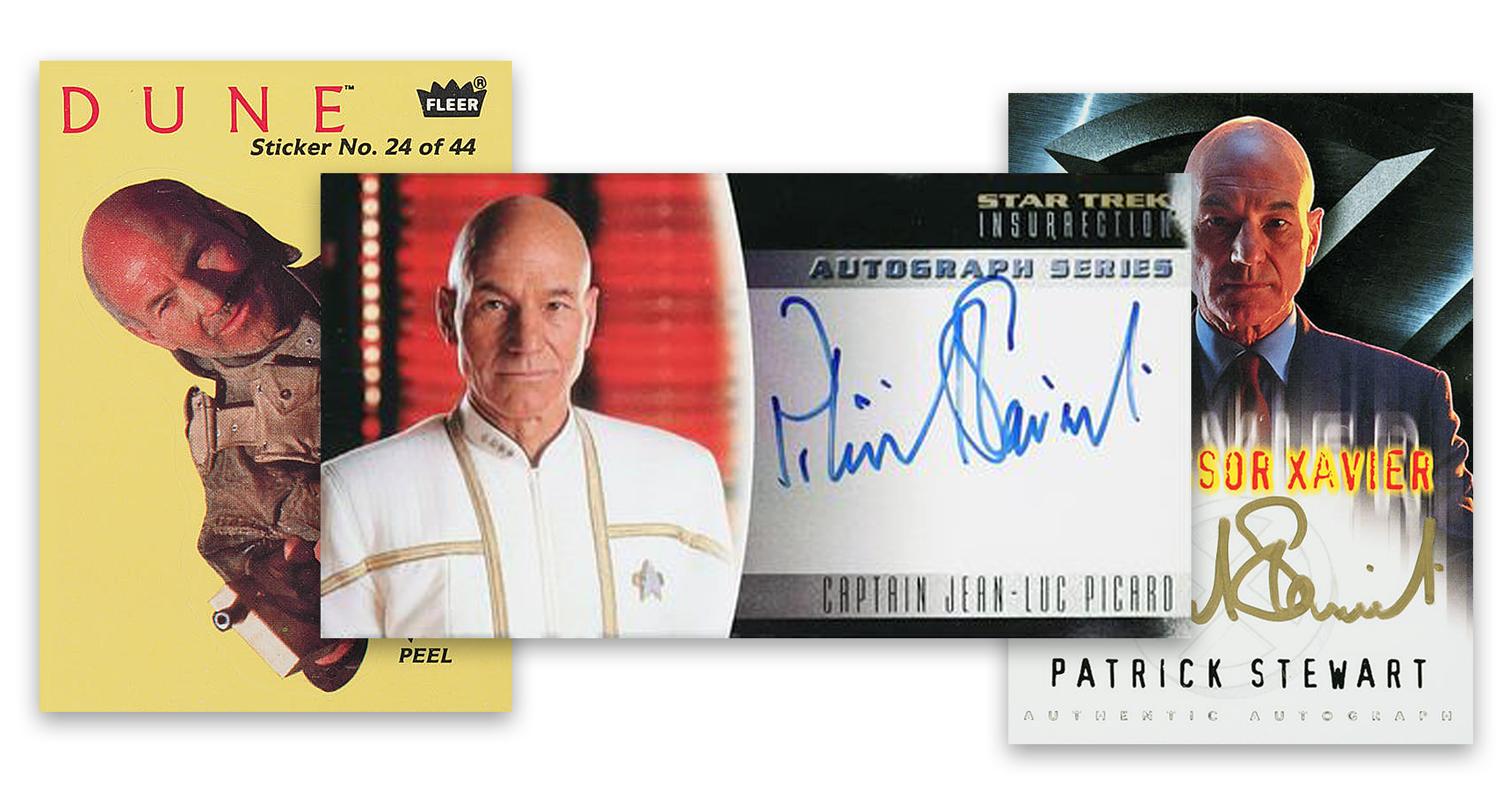
His early trading cards offer a reminder that his career extended well beyond Starfleet. The 1984 Fleer Dune #12 Gurney Halleck features Stewart as the soldier who helps train Paul Atreides in David Lynch’s film. It is among his earliest documented trading card appearances and a useful starting point for anyone collecting his career. The release also includes a Gurney Halleck sticker #24.

For Star Trek collectors, one of his key autograph cards is 1998 SkyBox Star Trek: Insurrection #A-1. The set used an oversized format, giving the cast photographs and signatures more room than a standard card.
Stewart’s autograph was available through a redemption. Collectors who pulled it had to send it in and wait for the signed card. That detail matters when buying today: the original redemption and the completed autograph are separate and both remain collectible.
Another notable release is 2000 Rittenhouse Star Trek: The Next Generation Profiles #A1. Later Rittenhouse sets gave fans more choices, including an autograph featuring Stewart as Dixon Hill, Picard’s fictional detective persona. For collectors with a favourite episode or storyline, these different portrayals offered reasons to own more than one Stewart signature.
His role as Professor X brought another group of collectors into the picture. The 2000 Topps X-Men Movie autograph is especially desirable. Signed in gold ink, Stewart’s card was one of the release’s toughest pulls. Beckett reported odds approaching one in 1,300 packs.
The 2006 Rittenhouse X-Men: The Last Stand autograph is another important card. Beckett reported fewer than 300 copies were produced, placing it among the scarce signatures on a checklist filled with recognizable actors. Both releases appeal to X-Men fans and collectors who already knew Stewart as Picard.

Stewart also had a very attractive and stylish autograph. His flowing signature and prominent capital letters gave a distinctive look. That is an aesthetic judgment, of course, and individual signatures vary. Collectors should examine ink strength, placement and contrast. The gold signature on his Topps X-Men card is particularly appealing when it remains clear against the image and white background.
Was Stewart a Collector?
Although he was an avid fan of motor sports and soccer, there is no clear evidence that he collected trading cards. He did keep objects connected to meaningful experiences. After filming Picard’s farewell encounter with Data in the first season of Star Trek: Picard, he bought the chair used in the scene. He explained the purchase in sentimental terms, a reason many collectors would understand.
One of his better collectible encounters involves Picard’s Ressikan flute from “The Inner Light.” Its $48,000 sale at Christie’s in 2006 amused Stewart because the prop could not actually play. Its value came from the story and his performance. For a fan who loved that episode, the connection mattered far more than whether it produced music.
A Generational Icon
That connection helps explain why Stewart was so beloved. Picard listened before acting. Xavier offered acceptance to outsiders. Stewart gave both roles authority without losing their warmth. His humour away from those performances made him approachable, too.
For collectors, a card or autograph preserves some of that experience. It can recall watching The Next Generation with family, discovering X-Men at the cinema or meeting other fans. Stewart gave those memories a familiar face and a voice that will be difficult to forget.

GRADEx Staff
This story is a team effort. Our writers, editors, and hobby experts worked together, researching and reporting to bring you this piece.
Make us a Google preferred source